
Ultimate Seattle Aquarium Guide – Tickets, Hours & Things to Do
Imagine standing under a glowing dome. Harbor seals glide overhead. Their sleek bodies cast shadows on your face. Around you, rockfish dart between kelp forests. Giant Pacific octopuses stretch their tentacles across rocky caves.
This isn’t just any aquarium. This is the Seattle Aquarium, sitting on historic Pier 59 along Elliott Bay. The wonders of the Salish Sea come alive just steps from downtown Seattle.
Since I first visited in 2018, I’ve watched the Seattle Aquarium do something different. It doesn’t try to show every ocean on Earth. Instead, it became the world’s best window into Pacific Northwest marine life.
With its new Ocean Pavilion expansion and focus on local conservation, this waterfront attraction offers something rare: depth over breadth, quality over quantity.
Are you planning your first visit? Or coming back to see new exhibits? This guide answers every question you need to make the most of your time here.
What Makes Seattle Aquarium Special (The Experience Overview)
I’ve found that the Seattle Aquarium takes a different approach than huge facilities showing tropical reefs and distant ocean life. Instead, it celebrates the incredibly diverse marine life of the Pacific Northwest. The experience feels both educational and deeply connected to this place.
The aquarium houses over 800 species across well-designed exhibits. I’ve discovered the compact size actually works in its favor. Most visitors spend 2-3 hours here. I often stay for a full morning or afternoon when I’m truly immersed.
The manageable size means you can really connect with exhibits. You don’t rush past them. And the stunning Elliott Bay views provide a backdrop that landlocked aquariums simply can’t match.

What Makes It Different
The hands-on approach truly sets this place apart.
Interactive Elements:
- Tide pool touch tanks (I can feel the texture of sea creatures)
- Keeper talks that reveal animal personalities
- Real connections with the animals
I’ve watched sea otters with names and recognizable behaviors. I’ve listened to staff members talk about conservation with real passion. I’ve even seen skeptical teenagers captivated by a giant Pacific octopus solving puzzles.
Planning Your Visit: Seattle Aquarium Hours and Best Times
Current Operating Hours
The aquarium opens daily from 9:30 AM to 5:00 PM. Last entry is at 4:00 PM. Summer months usually bring extended hours to 6:00 PM on weekends and some weekdays. It stays open year-round, including most holidays. This makes it reliable no matter when you visit Seattle. Always check the official website before your visit for any schedule changes.
When to Visit for the Smallest Crowds
I’ve learned that timing makes all the difference for a peaceful experience.
Best Times (Least Crowded):
- Weekday mornings (especially Tuesday-Thursday)
- Right at opening (9:30 AM)
- Late September through November
- January through March
Arriving right when they open gives me about 45 minutes before school groups arrive.
Busiest Times (Avoid These):
- Spring break
- Summer vacations
- Weekend afternoons in summer (especially Saturday)
If weekend visits are your only option, I find Sunday mornings are generally quieter than Saturday afternoons.
Weather Tip: Rainy weather actually works in your favor. The aquarium gets busier on nice days when tourists look for indoor activities. But since you’re entirely indoors, I can visit comfortably in any weather.
Seasonal Considerations
I’ve experienced how the aquarium changes subtly throughout the year.
| Season | What to Expect |
| Summer | Extended hours, special programs, maximum crowds |
| Fall/Winter | More peaceful visits, easier to observe animals, fewer people |
| October | Halloween events with family activities |
| December | Holiday decorations |
| Spring | Special programming, possible breeding seasons |
Seattle Aquarium Tickets: Pricing, Discounts, and How to Save
Current general admission runs approximately
| Ticket Type | Price |
| Adults (13-64) | $39.95 |
| Youth (4-12) | $29.95 |
| Seniors (65+) | $37.95 |
| Children 3 and under | Free |
Where to Buy Tickets
The aquarium strongly recommends buying tickets online ahead of time.
Why Buy Online:
- Same-day tickets may sell out during peak season
- Avoid waiting in line twice (once to buy, once to enter)
- Select a timed entry window
- Get tickets by email within minutes
I always buy online tickets. They arrive by email right away. I purchase directly through the official website to guarantee authentic tickets.
Seattle Aquarium Promo Code and Discount Opportunities
Several legitimate discount pathways exist:
- City passes: Seattle CityPASS includes aquarium admission with other major attractions at roughly 40% savings
- Membership discounts: AAA members receive $2-3 off per ticket, and active military personnel get reduced rates with valid ID
- Credit card benefits: Some travel rewards programs offer aquarium discounts through benefits portals
- Library programs: Many public library systems provide free or discounted passes
- Promotional codes: Legitimate promo codes occasionally appear through email newsletters and seasonal promotions—the official website remains the most reliable source
Seattle Aquarium Membership: Is It Worth It?
I believe membership is worth serious consideration for locals or anyone planning multiple visits.
Membership Pricing
| Type | Price | Who It’s For |
| Individual | ~$89 | Solo visitors |
| Dual/Household | ~$129 | Couples |
| Family | ~$169 | Families with kids |
The Math
Simple calculation: I’ve done the math. A family membership pays for itself in under two visits.
What You Get
- Guest passes
- Discounts at café and gift shop
- Members-only events with behind-the-scenes access
- Priority entry during peak times
- Reciprocal admission to 200+ aquariums nationwide (AZA program)
Who Benefits Most?
- Seattle-area residents planning multiple visits
- Families with children who love marine life
- Anyone planning to visit other aquariums while traveling
- Supporters who value funding conservation directly
Skip It If:
- Out-of-town visitors staying just a day or two
- Not planning to use reciprocal benefits elsewhere
Stick with standard admission for short visits.
Getting There: Seattle Aquarium Parking and Transportation

Parking Options Near the Aquarium
The challenging reality: waterfront parking in Seattle is limited, expensive, and competitive. The closest garage at 1531 Western Avenue sits about four blocks uphill and charges approximately $35-40 for all-day parking. The Waterfront Parking facility at Pier 59 offers closer proximity but fills quickly at similar costs.
Street parking consists largely of 2-hour metered spaces at premium rates, making it impractical for a full visit. Arriving before 10 AM during summer dramatically improves your chances of securing any spot. The aquarium does not operate dedicated parking or offer validation at nearby garages.
Cost Reality: If you’re staying downtown, parking often costs more than other transportation options. Plus, you have to navigate congested waterfront traffic.
Alternative Transportation (Better Options)
I’ve discovered most visitors find non-driving options better:
- Public transit: Multiple King County Metro bus lines stop within blocks, including routes 40, 56, 99, 113, and 121. Light rail reaches Westlake Station, then walk 15 minutes downhill or transfer to a waterfront bus
- Rideshare: Uber and Lyft drivers can drop you directly at the Pier 59 entrance
- Walking: Most downtown hotels sit within 10-20 minutes walking distance via scenic routes through Pike Place Market
- Biking: Bike racks are available near the entrance, and the flat waterfront path makes cycling pleasant
Navigating the Aquarium: Seattle Aquarium Map and Layout Strategy
The aquarium has three main levels. The design flows vertically. The entrance is on the middle floor. When you enter, the gift shop is on your right. Elevator access is straight ahead.
Suggested Visiting Route
I’ve developed a smart path that gets you the best experience with less backtracking.
Start Upstairs
- Go upstairs right after entry
- This spectacular 120,000-gallon tank is amazing
- Arriving first (especially weekday mornings) means fewer crowds
Upper Level Exhibits:
- Pacific Coral Reef
- Giant Pacific Octopus habitat
- If visiting during feeding times, plan to return (octopus feedings draw big crowds)
Middle Level
- This is the aquarium’s signature feature
- 360-degree viewing area
- Sits below Window on Washington Waters
- See the same exhibit from a totally different angle
Other Middle Level Exhibits:
- Life on the Edge (intertidal creatures)
- Birds & Shores (engaging touch pools)
Lower Level
- Harbor seals
- Sea otters
- Fur seals
- These animals steal the show!
Timing Tip: I time my descent for feeding schedules. These charismatic creatures are most active then.
Ocean Pavilion:
- Connects to this lower level
- Plan substantial time here
Accessibility and Family-Friendly Features
Elevators connect all levels for wheelchair and stroller accessibility. Stroller parking areas exist on each floor, though I’ve found tight quarters during peak times may make baby carriers more practical. Family restrooms include changing stations, and a dedicated nursing room provides privacy.
The aquarium offers sensory-friendly accommodations including quieter spaces for families of children with sensory sensitivities. Audio levels remain generally moderate, though the marine mammal area can echo during busy periods.
The Star Attractions: Seattle Aquarium Animals and Exhibits
Window on Washington Waters
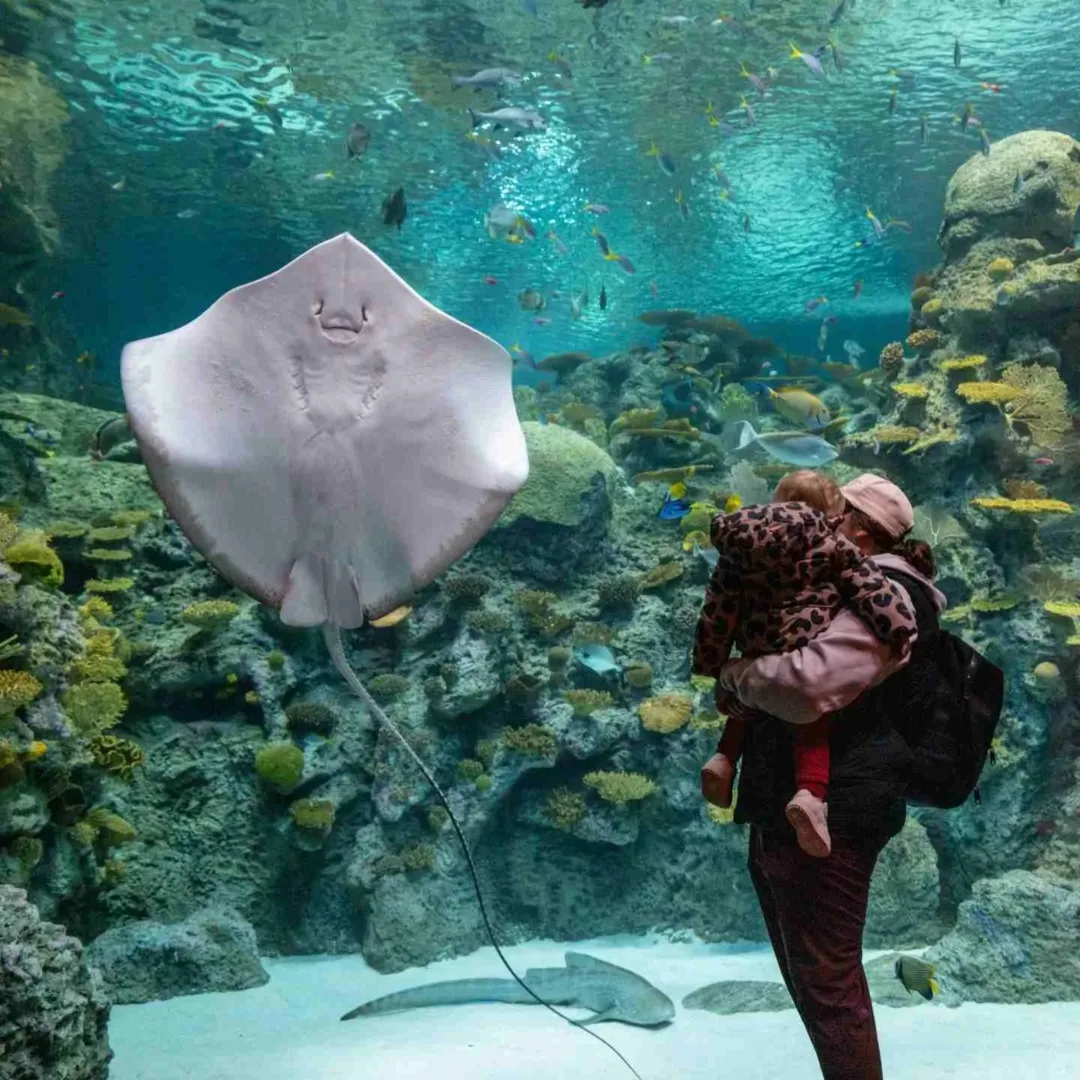
I consider this massive 120,000-gallon exhibit the centerpiece. It recreates rocky reef and open water habitats of Puget Sound.
What’s Different: You don’t see tropical fish in neon colors. Instead, I observe Pacific Northwest diversity:
- Copper rockfish navigating kelp forests
- Bat rays gliding along sandy bottoms
- Immense lingcod lurking near rocks
- Coho salmon cutting through the water
Why It’s Extraordinary: These species truly live in local waters just outside the building. That’s what I find amazing about it.
The 18-foot viewing window gives remarkable close-up views. This is especially true when divers enter for feeding demonstrations.
During these demos, I learn about:
- Individual fish personalities
- Ecological relationships
- Conservation challenges
Underwater Dome (The Signature Experience)
I’ve found few aquarium features as distinctive as this spherical viewing chamber. When I descend into the dome, I’m literally inside the Window on Washington Waters exhibit, creating the sensation of standing on the sea floor with 360-degree views.
The architectural impact cannot be overstated. I’ve discovered that observing the same exhibit from below transforms your understanding—you notice different species, behaviors, and spatial relationships.
The dome accommodates limited numbers at once, so during crowded periods, be prepared to rotate through. Photographers should note that curved acrylic and varying light require adjusting settings for optimal results.
Seattle Aquarium Ocean Pavilion (The Game-Changing Expansion)
I witnessed this become the most significant expansion in the aquarium’s history. This 18,000-square-foot addition opened in 2024.
It fundamentally changes the attraction from a charming regional aquarium to a must-visit destination.
The Location: It extends over the water on Pier 60. The pavilion explores open ocean and deeper water ecosystems of the Pacific. It completes the story from shoreline to open sea.
What I Found: When I explored it, the architecture struck me. Expansive windows frame Elliott Bay and the Olympic Mountains. It houses multiple major exhibits including:
- Deeper Pacific habitats
- Expanded educational spaces
The Tanks: Larger tanks support schooling fish and oceanic species. These species need more swimming space than the original building provided.
The Exhibits: Interactive displays emphasize:
- Climate change impacts on ocean ecosystems
- Research partnerships
The pavilion connects seamlessly through a passage that’s also an exhibit space.
Time Budget: I recommend at least 30-45 additional minutes for the Ocean Pavilion. It’s a compelling reason to return if you last visited before 2024.

Marine Mammal Encounters
I’ve found the marine mammals consistently rank as visitor favorites.
Harbor Seals
These seals live in a large outdoor habitat. You can see them both above and below water.
When I watch these athletic swimmers perform barrel rolls, their grace is remarkable. Their hauled-out sunbathing sessions reveal playful, dog-like personalities.
Sea Otters
The sea otter exhibit offers particularly exceptional viewing.
What I Love: These charismatic animals are constantly active:
- Grooming their luxurious fur
- Manipulating objects with dexterous paws
- Floating on their backs while munching treats
- Playing
Feeding Time: I’ve witnessed sea otter feeding times create standing-room-only conditions. Keepers discuss conservation challenges while showing enrichment activities. It’s fascinating.
Northern Fur Seals
These seals have their own dedicated space. They’re less commonly displayed than harbor seals. They give you opportunities to observe a species that spends most of its life in open ocean.
My Tip: I always check the daily schedule when I arrive. I plan my route to catch at least one feeding presentation. The educational value during feedings dramatically exceeds just watching animals at rest.
Birds & Shores
This exhibit transitions from purely aquatic environments to intertidal zones where ocean meets land. When I explored the shorebird habitats, I saw species like pigeon guillemots and puffins, with viewing angles allowing observation both above and below water—watching these birds “fly” underwater rivals the grace of any tropical fish.
The touch pool represents the most interactive feature, particularly engaging for children. Under staff supervision, I can gently touch sea stars, anemones, sea cucumbers, and urchins, learning through direct experience. Staff members ensure appropriate animal handling, making this both educational and conservation-minded.
Life on the Edge and Pacific Coral Reef
Life on the Edge focuses on organisms surviving intertidal zones—arguably Earth’s most challenging environment. This exhibit includes smaller tanks showcasing nudibranchs, sea stars, urchins, and various invertebrates that reveal intricate beauty under aquarium lighting.
The Pacific Coral Reef exhibit demonstrates that the Pacific Northwest isn’t exclusively cold-water ecosystems. This tropical display provides color contrast to predominantly green and brown local habitat palettes, though it remains smaller than what you’d encounter at aquariums focused specifically on tropical ecosystems.
Animal Encounter Programs and Behind-the-Scenes Tours
Beyond general admission, I’ve discovered enhanced experiences that offer deeper engagement.
Behind-the-Scenes Tours
These tours give you access to areas usually closed to the public:
- Food preparation areas
- Quarantine facilities
- Top of major exhibits
You see the tremendous work required to maintain healthy animal populations.
Animal Encounter Programs
These programs vary by season. They may include opportunities for closer interaction with certain species under staff supervision.
Important Details:
- Require advance reservation
- Cost extra beyond general admission (typically $50-100+ per person)
- Check the website for current offerings
- Programs change based on animal welfare and staff availability
Daily Shows, Feeding Times, & Things to Do at Seattle Aquarium
I’ve learned the aquarium structures daily programming around animal feeding times and keeper presentations. These create natural gathering points throughout the day.
Instead of stadium-style shows, presentations happen right at exhibits. This maintains an educational focus.

Typical Feeding Schedules
| Animal | Times | Notes |
| Sea Otters | 10:30 AM, 1:30 PM | Very popular |
| Harbor Seals | 11:00 AM, 2:00 PM | Active demonstrations |
| Window on Washington Waters Dive Shows | Strategic intervals | 15-20 minutes long |
| Giant Pacific Octopus | Mid-morning, early afternoon | Enrichment activities |
Times vary seasonally based on animal health. I always check the daily schedule board near the entrance.
Diver Presentations
When I watch diver presentations in the Window on Washington Waters tank, I gain remarkable insight.
- Divers hand-feed fish
- They interact with species
- A narrator explains behavioral observations
- You learn about conservation challenges
- They share individual animal backstories
These typically last 15-20 minutes. They occur three to four times daily.
Keeper Talks
Throughout the facility, I’ve enjoyed keeper talks that happen spontaneously. Staff members stationed at exhibits frequently talk with visitors. They share information beyond what signs provide.
My Tip: Don’t hesitate to ask questions. Staff enthusiasm and knowledge is one of the aquarium’s greatest strengths.
Dining, Shopping, & Amenities at Seattle Aquarium
Food Options Inside the Aquarium
The café on the main level offers standard fare: sandwiches, salads, hot dogs, pizza slices, snacks, and beverages. Expect $12-15 for sandwiches and $8-10 for basic items. Food quality is acceptable but unremarkable—you’re paying for convenience.
Outside food and beverages are permitted, making the aquarium unusually friendly to budget-conscious families. You can pack lunches and eat in designated areas or at outdoor seating along the waterfront when weather permits.
Numerous restaurants sit within a five-minute walk, from quick-service options to sit-down establishments with Elliott Bay views.
The Gift Shop
The gift shop occupies prime real estate near entrance and exit, stocked with plush animals, logo merchandise, and educational toys. What I find elevates it beyond generic museum shops is the selection of locally-made items, conservation-focused products, and scientific books appealing to serious marine biology enthusiasts.
Proceeds support the conservation mission, and some items—particularly locally-crafted jewelry and artwork featuring Pacific Northwest marine themes—make genuinely unique Seattle souvenirs. You don’t technically need to exit through the gift shop, though the route subtly encourages browsing.
Other Practical Amenities
Lockers:
- Available near the entrance
- Store bags, jackets, or purchases
- I’ve found the compact aquarium size makes them less necessary
Other Amenities:
- Coat hooks in various locations
- Restrooms well-distributed across all levels
- Water bottle refill stations (sustainable!)
- Free Wi-Fi throughout (check feeding schedules or share photos)
What Visitors Are Saying: Seattle Aquarium Reviews Insights
I’ve read thousands of visitor reviews. They reveal consistent patterns that help set the right expectations.
What People Consistently Praise
- Intimate, manageable scale (different from huge mega-aquariums)
- Families can see everything without exhausting children
- Focused Pacific Northwest theme creates coherence
- Educational depth
- Sea otters and harbor seals (nearly universal delight!)
- Waterfront setting and Elliott Bay views
- Staff knowledge and enthusiasm
I’ve seen visitors describe specific animals by personality traits. This suggests successful animal welfare practices.
The aquarium integrates into its environment. It doesn’t create a hermetically sealed experience.
Common Criticisms and Context
Ticket prices relative to size generate debate. Some visitors feel $40 per adult is steep for 2-3 hours, particularly compared to massive facilities charging similar rates. However, I’ve noticed this criticism often comes from reviewers expecting quantity over quality.
If you value in-depth exploration of regional ecosystems and conservation mission clarity, pricing becomes more defensible. Crowds during peak times can make viewing frustrating, with difficulty getting close to popular exhibits.
I’ve found this is readily managed by following earlier timing advice—weekday mornings transform the experience. Some exhibits show their age in the original building, though the Ocean Pavilion expansion significantly addressed this concern.
The Consensus
If you’re expecting a massive aquarium with sharks, dolphins, and tropical tunnels, you’ll likely feel disappointed. If you appreciate regional focus, quality over quantity, and supporting conservation-minded institutions, I believe the Seattle Aquarium delivers exceptional value.
Special Events: Seattle Aquarium Halloween and Seasonal Programming

Seattle Aquarium Halloween
I’ve attended these October events. They’ve become a tradition. They offer family-friendly activities that add festive atmosphere without overwhelming the core experience.
- Seasonal decorations
- Costume contests for children
- Special programming around “spooky” marine creatures (wolf eels, octopuses, bat rays)
Family-Friendly: Events stay appropriate for all ages. They avoid haunted house-style scares. Instead, they focus on education-focused fun.
Practical Details:
- Children can wear costumes (masks must show full face)
- Special treat stations give out candy with conservation messages
- Events run on weekends throughout October
- Extended evening hours
Other Seasonal Events
Throughout the Year:
| Month/Season | Event | Focus |
| April | Earth Day | Enhanced conservation programming |
| May | Orca Awareness Month | Endangered Southern Resident orcas presentations |
| Summer | Evening events | Various themes |
| December | Holiday season | Festive decorations, themed activities |
| Year-round | Traveling exhibits | Something new for repeat visitors |
The aquarium doesn’t let holiday decorations overwhelm exhibits. Rotating displays mean I encounter something new on repeat visits.
Conservation Mission and Why Your Visit Matters
Behind the engaging exhibits is the Seattle Aquarium’s essential purpose: conservation of Pacific Northwest marine ecosystems.
I’ve come to understand this mission transforms a tourist attraction into something more meaningful. You’re supporting active efforts to protect the environments you’re seeing.
Marine Mammal Rescue
The aquarium operates rescue and rehabilitation programs. They respond to:
- Stranded seals
- Injured sea otters
- Other animals in distress
Many animals I observe arrived as rescue cases. They can’t return to the wild due to injuries or human habituation.
Your admission fees directly fund these year-round rescue efforts.
Research Partnerships
The aquarium works with universities and government agencies. This advances understanding of:
- Marine biology
- Climate change impacts
- Conservation strategies
The aquarium’s scientists contribute to studies on:
- Ocean acidification
- Salmon recovery
- Projects informing policy decisions affecting Puget Sound’s future
Educational Programs
The programs extend beyond visitors walking through exhibits.
School Programs:
- Reach thousands of students annually
- Many funded through donations
- Ensure access regardless of school budgets
- Create the next generation of ocean advocates and marine scientists
Your Impact
When you purchase admission, membership, or gift shop items, you’re participating in conservation efforts that go far beyond entertainment. I’ve found the aquarium makes this connection clear. It deepens the experience for visitors who care about environmental stewardship.
Combining the Seattle Aquarium with Other Waterfront Attractions
I’ve discovered the Pier 59 location positions the aquarium perfectly for a full day of waterfront exploration. Pike Place Market sits just a 5-minute walk uphill—
I can easily visit before or after the aquarium, watching fishmongers throw salmon and sampling local products. The Seattle Great Wheel at Pier 57 offers 20-minute rides in climate-controlled gondolas with spectacular views from 175 feet above Elliott Bay.
Argosy Cruises departs from Pier 55 for harbor tours providing different perspectives on marine environments I’ve just explored. Olympic Sculpture Park lies a 10-minute walk north along the waterfront path, offering free outdoor art installations.

Sample First-Time Visitor Itinerary
Full Day Plan:
| Time | Activity |
| 9:00 AM | Early breakfast at Pike Place Market |
| 9:30 AM | Arrive at Seattle Aquarium at opening |
| 12:00 PM | Lunch at waterfront restaurant |
| 1:00 PM | Seattle Great Wheel ride |
| 2:00 PM | Walk waterfront trail to Olympic Sculpture Park |
| 4:00 PM | Return to Pike Place Market |
This schedule packs significant attractions into one day. It maintains a reasonable pace.
Insider Tips for an Exceptional Visit
Here are my best tips from multiple visits:
- Download the aquarium app before arrival for real-time feeding schedules and interactive content
- I start on the upper floor and work downward to move against typical crowd flow
- Plan 2-3 hours minimum, extending to 3-4 hours with young children or for thorough Ocean Pavilion exploration
- Bring a light jacket even in summer—waterfront breezes make it cooler
- I visit tide pools early before school groups arrive and before creatures become less responsive
- Ask staff about special animal enrichment schedules beyond standard feeding times
- For underwater photography, turn off flash, shoot at an angle to glass, and use burst mode for movement
- Consider visiting twice in one day with membership—I’ve found morning and late afternoon offer dramatically different experiences
- Benches in the Underwater Dome area provide excellent rest spots for continuous observation
- Establish a meeting point near the entrance with children in case anyone gets separated
Final Thoughts: Is the Seattle Aquarium Worth Visiting?
I’ve found the Seattle Aquarium rewards visitors who value depth over breadth, regional expertise over global sampling, and conservation mission over pure entertainment. If you’re seeking a massive facility with performing dolphins and shark tunnels, this isn’t your destination.
If you want to genuinely understand Pacific Northwest marine environments, observe charismatic animals exhibiting natural behaviors, and support meaningful conservation work, I believe the Seattle Aquarium excels.
The Ocean Pavilion expansion elevates the attraction significantly, addressing previous size criticisms while maintaining the intimate feel that makes the experience distinctive. I recommend first-time Seattle visitors absolutely include the aquarium in their itinerary, particularly when traveling with children or harboring interest in marine biology.
The waterfront location, walkability to other attractions, and 2-3 hour visit duration make it logistically straightforward to combine with other activities. For locals, I’ve found membership clearly pays off in value and access, transforming the aquarium into a resource you can visit casually rather than feeling pressure to see everything in one session.
The ability to drop in for an hour creates an entirely different relationship with the facility. I appreciate how the Seattle Aquarium embraces what makes it unique rather than attempting to compete with facilities ten times its size, and that focused excellence makes it genuinely worth visiting.
Ready to Explore?
I recommend booking your tickets in advance through the Seattle Aquarium’s official website. This guarantees entry during your preferred time slot. Check for current promotions. Consider membership if you’re local or planning multiple visits.
Most Importantly: Arrive with curiosity. I’ve found the staff’s enthusiasm for Pacific Northwest marine life is contagious. You’ll leave with newfound appreciation for the remarkable ecosystems thriving just beneath the surface of local waters.


