Gruyere & Thyme Fall Focaccia Recipe
This gruyere & thyme fall focaccia recipe turns a classic Italian bread into a cozy seasonal side. Nutty gruyère melts into golden pockets across the top, and fresh thyme adds an earthy, woodsy aroma. The bread bakes up crisp on the bottom and light and airy inside.
You build the dough in a stand mixer, let it rise slowly, then dimple and top it. The result is a 1-inch-thick focaccia that fits holiday tables and fall dinners.

Quick Recipe Snapshot
- Prep Time: 30 minutes
- Cook Time: 50 minutes
- Total Time: 4 hours 20 minutes (includes rising)
- Servings: 18 pieces
- Difficulty: Intermediate
- Best For: Holiday side dish and fall entertaining
Before You Start
- Initial preparation: Check your yeast’s expiration date before measuring anything.
- Ingredient organization: Separate dough ingredients from topping ingredients into two groups.
- Equipment requirements: Use a stand mixer with a dough hook attached.
- Temperature considerations: Warm the water to 105°F–115°F, never hotter.
- Important preparation reminders: Plan for 3–5 hours of rising before baking.
Ingredient List
For the Focaccia Dough
- 6 ¼ cups bread flour
- 2 teaspoons instant dry yeast
- 2 cups warm water (105°F–115°F or 40°C–46°C)
- 1 tablespoon granulated sugar
- ½ cup plus 2 tablespoons extra virgin olive oil
- 4 teaspoons fine sea salt
For the Focaccia Topping
- ¼ cup extra virgin olive oil, plus more for greasing the pan
- ¼ cup room temperature water
- 7 ounces gruyère cheese, cut into small cubes (not pre-shredded)
- 2 tablespoons fresh thyme leaves
- 2 teaspoons Maldon sea salt flakes
Ingredient Substitutions
- Active dry yeast: Swap in 2 teaspoons active dry yeast, same amount.
- Dried thyme: Use 2 teaspoons dried thyme in place of fresh leaves.
- Different cheese: Replace gruyère with 7 ounces cubed Comté or fontina.
- Rosemary twist: Add 1 tablespoon chopped fresh rosemary with the thyme.
- Dairy-free option: Use plant-based cheese cubes, added at the topping stage.
Equipment You Need
- Stand mixer with dough hook: Kneads the sticky, oil-rich dough until smooth.
- Large mixing bowl: Holds the dough as it triples during the first rise.
- 12 x 18 inch light-colored sheet pan: Bakes evenly and prevents an overly dark bottom.
- Plastic wrap: Traps moisture and warmth while the dough rises and proofs.
- Cooling rack: Lets air circulate so the crust stays crisp.
- Tea towel: Covers the warm bread to keep the crumb soft.
How to Make This Recipe?
Great gruyere & thyme fall focaccia recipe comes from patience, not effort. You mix a wet, oil-rich dough, let it triple in size, then stretch, dimple, top, and bake it hot. Each phase builds air and flavor that carry into the final loaf.
Phase 1: Prepare Everything
Measure every ingredient before you turn on the mixer. Warm the water to 105°F–115°F, since water near 140°F kills yeast. Cube the gruyère into small, bite-sized pieces and strip the thyme leaves from their stems. Set the topping ingredients aside so they are ready later.
Phase 2: Start Building the Recipe
Mix the bread flour and instant yeast in the stand mixer on medium-low speed. Add the warm water in three batches, letting the flour absorb each one fully. Add the sugar and mix to combine. Then pour the olive oil into the center in four batches, waiting for each to absorb. Flip the dough with a silicone spatula now and then to help the hook catch the oil.
Phase 3: Develop the Main Components
Add the fine sea salt after the last batch of oil and mix until all oil disappears. Salt tightens the gluten (the stretchy protein network in dough), which helps the dough absorb the oil. Raise the speed to high and mix for 1–2 minutes. The dough is ready when you hear a popping sound and it wraps around the hook. Shape it into a tight ball, place it in an oiled bowl three times its size, and cover it. Let it rise in a warm, draft-free spot until tripled, about 3–5 hours.
Phase 4: Bring Everything Together
Generously oil the bottom and sides of the sheet pan. Turn the dough into the pan and let gravity stretch it toward the edges. If it pulls back, rest it 10 minutes, then stretch again. Whisk ¼ cup water with ¼ cup olive oil. Dimple the dough with your fingertips, pour the mixture evenly over it, then scatter the gruyère, thyme, and salt flakes on top.
Phase 5: Finish and Serve
Cover the pan and proof at 75°F–80°F until tripled, about 60 minutes. Meanwhile, set a rack in the upper-middle slot and heat the oven to 430°F. Remove the plastic wrap gently so you keep the air inside. Bake for 25–30 minutes until golden and crisp. Cool on a rack under a tea towel, then slice. For serving, reheat slices at 350°F for 18–20 minutes.
How to Tell When It’s Ready?
Finished focaccia shows clear signs before you ever slice it. Check these cues as the timer winds down.
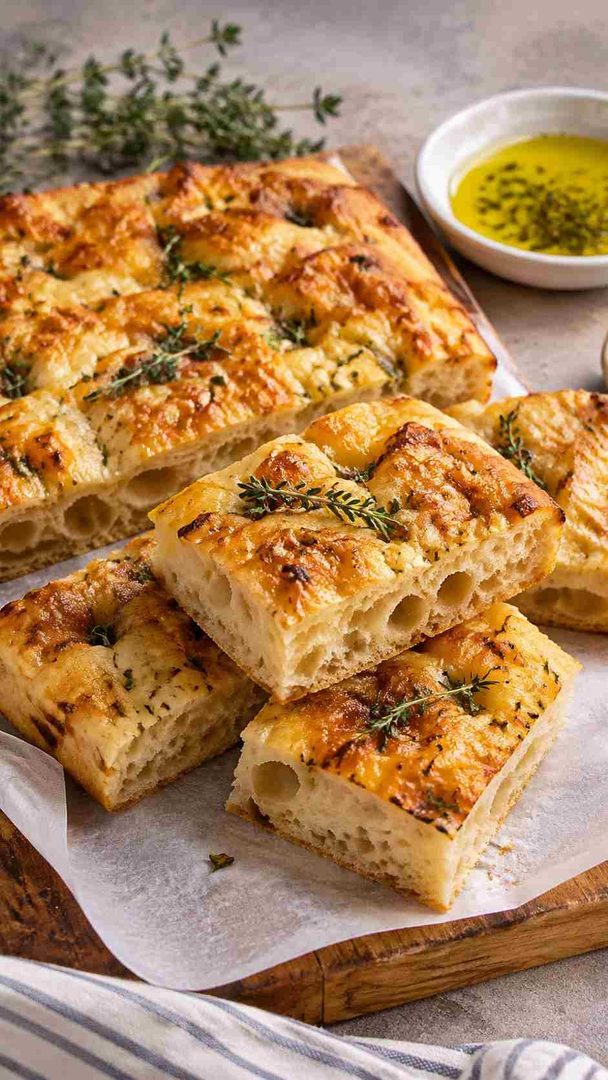
- Appearance: Deep golden top with bubbling, lightly browned cheese pockets.
- Texture: Crisp bottom crust with a light, open, airy crumb inside.
- Temperature or Doneness: Internal temperature reaches about 200°F–210°F on a thermometer.
- Final Result: An even loaf about 1 inch thick, fragrant with thyme.
Why Does This Recipe Work?
This focaccia succeeds because every step serves a purpose. Here is why each element matters.
- Flavor combination: Gruyère brings a nutty, slightly sweet richness that deepens as it bakes. Fresh thyme adds an earthy note that cuts through the cheese. Together they taste like fall without any heavy spices.
- Texture and consistency: Bread flour has more protein than all-purpose flour, which creates a chewy bite. The generous olive oil fries the bottom crust in the pan. You get crunch outside and softness inside.
- Cooking method: The classic Italian method adds water and oil in batches for full absorption. A long, slow rise builds air bubbles and flavor. Baking at 430°F sets the crust quickly.
- Preparation time: Active work takes only 30 minutes. The rest is hands-off rising time. You can tidy up, prep other dishes, or relax.
- Ingredient accessibility: Every ingredient is available at most grocery stores. Gruyère sits in the specialty cheese case. Thyme grows easily and dries well if fresh is scarce.
Important Tips for Better Results
Small habits separate dense bread from light, airy focaccia. Apply these tips on your next bake.
- Practical tip: Weigh ingredients with a kitchen scale for consistent results.
- Preparation tip: Cube the gruyère instead of using pre-shredded cheese.
- Cooking tip: Proof the pan on top of a warm oven, not inside.
- Texture tip: Never re-dimple the dough after the final proof.
- Seasoning or adjustment tip: Use flaky or kosher salt on top, never iodized table salt.
- Serving tip: Reheat focaccia before serving for the best crisp crust.
Recipe Variations and Customizations
This gruyere & thyme fall focaccia recipe adapts well to new flavors and occasions. Use these ideas to make it your own.
- Make It More Flavorful: Add caramelized onions or roasted garlic cloves before baking.
- Adjust the Texture: Bake 5 extra minutes for a crunchier, darker crust.
- Create a Different Version: Swap thyme for sage and add thin apple slices.
- Adapt It to Your Preferences: Drizzle warm slices with honey for a sweet-savory finish.
What to Serve With This Recipe?
Gruyere & thyme fall focaccia recipe pairs well with both casual and festive menus. Match it to your meal with these ideas.
For Everyday Meals
Serve with tomato soup, butternut squash soup, or a simple green salad.
For Special Occasions
Place it beside roast turkey, glazed ham, or herb-crusted pork loin.
For a More Complete Meal
Add a charcuterie board with cured meats, olives, and fig jam.
For a Lighter Option
Pair small squares with arugula salad and a light lemon vinaigrette.

Make-Ahead Preparation
Focaccia rewards a little planning. Spread the work across your schedule with these steps.
- Prepare in Advance: Bake, cool, and freeze the focaccia up to weeks ahead.
- A Few Hours Before Serving: Thaw slices on the counter, still wrapped in the bag.
- Just Before Serving: Reheat at 350°F for 18–20 minutes until crisp.
Storage and Reheating
Gruyere & thyme fall focaccia recipe goes stale quickly at room temperature. Follow these steps to keep leftovers fresh.
- Refrigerator Storage: Store in an airtight bag up to 3 days.
- Freezer Storage: Freeze slices in an airtight bag for up to 3 months.
- Reheating Instructions: Bake on parchment at 350°F for 18–20 minutes.
- Restoring the Original Texture: Brush dry slices lightly with olive oil before reheating.
Common Problems and How to Fix Them
Most gruyere & thyme fall focaccia recipe issues trace back to yeast, temperature, or handling. Use these fixes to troubleshoot.
- The Texture Is Not Right: Dense bread means lost air; handle proofed dough gently.
- The Flavor Is Too Mild: Add more flaky salt and extra thyme next time.
- The Recipe Is Overcooked: Lower the rack slightly and check at 22 minutes.
- The Consistency Is Too Thick or Too Thin: Stretch dough fully to the pan edges for even thickness.
- The Final Result Looks Different Than Expected: Replace old yeast if dough fails to triple after 5–8 hours.
Frequently Asked Questions
How long does focaccia dough take to rise?
The first rise takes about 3–5 hours to triple in size. Colder kitchens slow the process, so a warm spot near a sunny window helps.
Can I use all-purpose flour instead of bread flour?
Bread flour works best for this recipe. All-purpose flour has less protein, so the focaccia turns out less fluffy, less crisp, and less chewy.
How thick should gruyere and thyme focaccia be?
Aim for about 1 inch (2.5 centimeters) thick after baking. A 12 x 18 inch sheet pan gives you that thickness with this dough amount.
Is dried thyme okay for this fall focaccia?
Dried thyme works when fresh is unavailable. Use about 2 teaspoons dried in place of 2 tablespoons fresh, since dried herbs taste stronger.
What is the best way to reheat leftover focaccia?
Reheat slices on a parchment-lined baking sheet at 350°F for 18–20 minutes. This warms the center and brings back the crunchy crust.