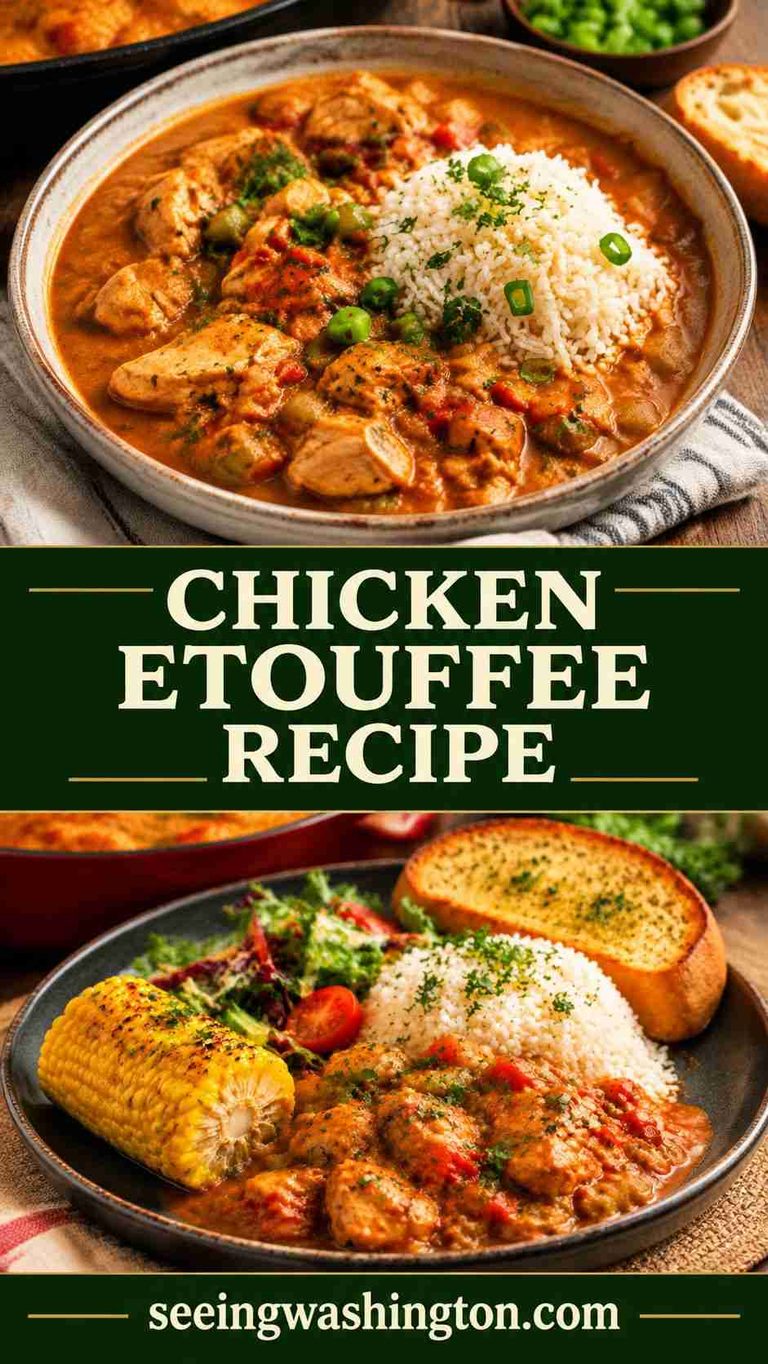
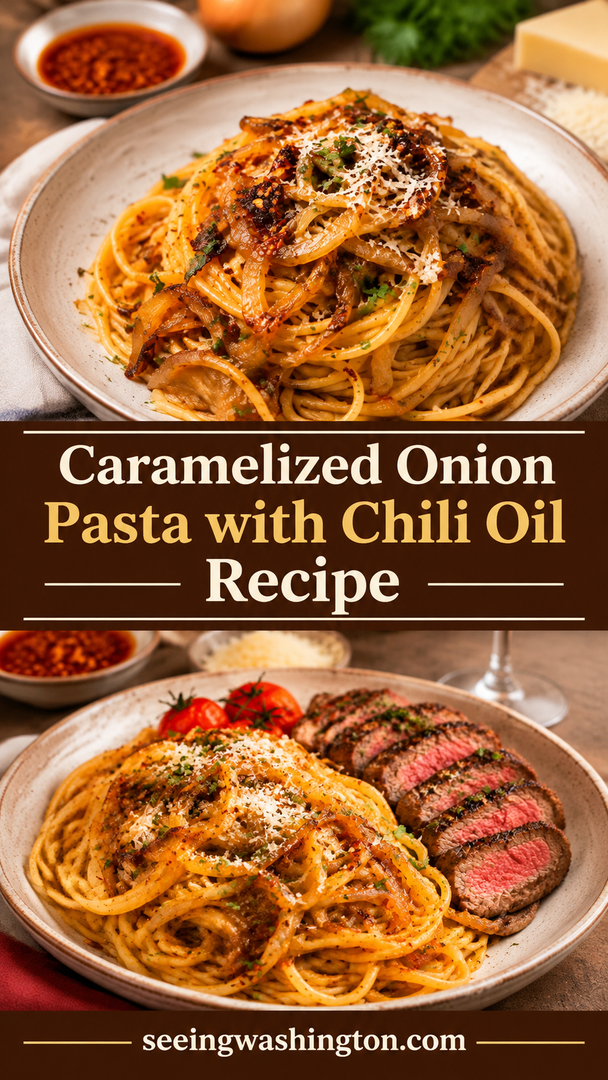
Caramelized Onion Pasta with Chili Oil Recipe
This caramelized onion pasta with chili oil recipe turns one large white onion into a rich, sweet-and-spicy dinner. Thin spaghetti twirls through a glossy sauce of jammy onions, garlic, chili crisp, soy sauce, honey, half and half, and Parmesan.
The dish takes 35 minutes and uses one skillet plus a pasta pot. Every bite is sweet, savory, and gently spicy. This guide covers prep, swaps, doneness cues, storage, and fixes for common mistakes.
Quick Recipe Snapshot
- Prep Time: 10 minutes
- Cook Time: 25 minutes
- Total Time: 35 minutes
- Servings: 2
- Difficulty: Easy
- Best For: Weeknight dinners for two, date nights, and meatless meals
Before You Start
- Initial preparation: Slice the onion thin and even so it caramelizes at one pace.
- Ingredient organization: Mince the garlic and grate the Parmesan before heating the pan.
- Equipment requirements: Use a wide 12-inch skillet so the onions cook evenly.
- Temperature considerations: Keep the heat at medium-low so the onions sweeten without burning.
- Important preparation reminders: Reserve ½ cup pasta water before draining the spaghetti.
Ingredient List
For the pasta:
- 8 oz dry thin spaghetti
- Salt, for the pasta water
For the caramelized onions:
- 1 large white onion, thinly sliced
- 1 tbsp olive oil
- 2 tbsp butter
- Small pinch of salt
For the chili oil sauce:
- 2 tbsp butter
- 4 cloves garlic, pressed or minced
- 1 to 2 tbsp chili crisp, plus more for serving
- 2 tbsp soy sauce
- 2 tbsp honey
- ⅔ cup half and half
- 1 tsp paprika
- ½ tsp garlic powder
- ½ tsp Italian seasoning
- ½ tsp black pepper
- ½ cup freshly grated Parmesan cheese
For serving:
- Fresh parsley, chopped, for garnish
- Extra chili crisp oil, for drizzling
Ingredient Substitutions
- Dairy-free: Replace half and half with ⅔ cup full-fat coconut milk.
- Gluten-free: Use gluten-free spaghetti and swap soy sauce for 2 tbsp tamari.
- Different sweetener: Replace honey with 2 tbsp maple syrup when adding soy sauce.
- Sharper cheese: Swap Parmesan for ½ cup grated Pecorino Romano, then reduce soy sauce slightly.
- Creamier sauce: Whisk 2 oz cream cheese into the sauce before the Parmesan.
Equipment You Need
- Large pot: Boils the spaghetti with room to move freely.
- 12-inch skillet: Spreads the onions in a thin layer for even browning.
- Chef’s knife: Slices the onion into thin, uniform strips that cook evenly.
- Wooden spoon: Stirs the onions and scrapes up browned bits without scratching.
- Tongs: Toss the spaghetti through the sauce so every strand gets coated.
- Microplane grater: Grates Parmesan finely so it melts smoothly into the sauce.
How to Make This Recipe?
This caramelized onion pasta with chili oil recipe runs on two tracks at once. The onions caramelize slowly in the skillet while the pasta cooks. Both meet in the pan for a final toss.
Phase 1: Prepare Everything
Peel the onion, halve it through the root, and slice it into thin half-moons. Mince the garlic and grate the Parmesan. Measure the paprika, garlic powder, Italian seasoning, and black pepper into one small bowl. Stir the soy sauce and honey together in a second bowl. Fill a large pot with water and set it on the stove.
Phase 2: Start Building the Recipe
Heat the olive oil and 2 tbsp butter in the skillet over medium-low heat. Add the sliced onion and a small pinch of salt. Cook for about 20 minutes, stirring often. The onions should soften, shrink, and turn lightly golden and glossy. Add a splash of water if they start to stick or darken too fast.
Phase 3: Develop the Main Components
While the onions cook, salt the boiling water and add the spaghetti. Cook until al dente (tender but still firm to the bite). Reserve ½ cup pasta water, then drain. Add the remaining 2 tbsp butter and garlic to the onions. Stir for 1 minute until fragrant, then stir in the chili crisp, soy sauce, and honey.
Phase 4: Bring Everything Together
Reduce the heat to low. Pour in the half and half and add the measured spices. Simmer for 5 minutes until the sauce coats the back of a spoon. Stir in the Parmesan until melted and smooth. Add the drained spaghetti and toss with tongs until every strand is coated.
Phase 5: Finish and Serve
Check the sauce consistency. Add reserved pasta water 1 tablespoon at a time if it feels tight. Taste and adjust with more chili crisp or pepper. Divide between two bowls. Finish with a drizzle of chili crisp oil and chopped parsley, then serve immediately.
How to Tell When It’s Ready?
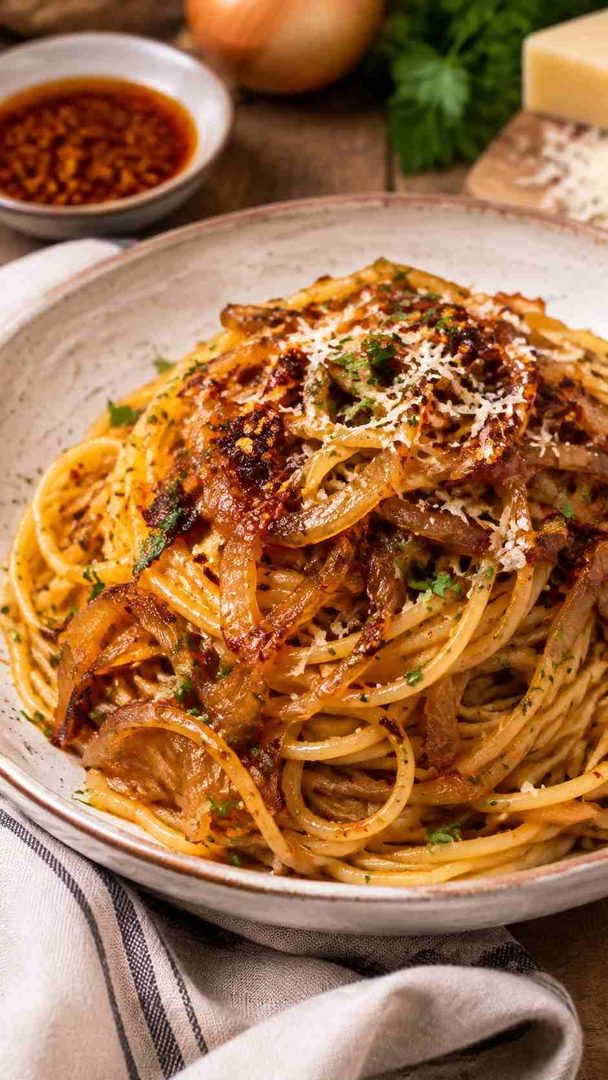
The finished pasta gives clear visual and texture cues. Check these signs before you plate.
- Appearance: The sauce looks glossy and clings to each spaghetti strand.
- Texture: Onions feel jammy and soft, and the pasta stays slightly firm.
- Temperature or Doneness: Onions are golden brown with no black or burnt edges.
- Final Result: Creamy, sweet-savory noodles with gentle heat and crunchy chili bits.
Why Does This Recipe Work?
Each step builds a layer of flavor in a short cooking window. These five factors explain the result.
Flavor combination
Caramelized onions bring deep sweetness that honey reinforces. Soy sauce adds umami (a savory, meaty taste) that balances the sugar. Chili crisp cuts through the richness with heat and crunch.
Texture and consistency
Half and half creates a light cream sauce that never feels heavy. Parmesan melts in and thickens the sauce naturally. Thin spaghetti holds the sauce without weighing down each bite.
Cooking method
Medium-low heat lets the onion’s natural sugars brown slowly without scorching. Simmering the sauce for 5 minutes concentrates the flavor. Tossing the pasta in the skillet helps the sauce bind to every strand.
Preparation time
Active prep takes about 10 minutes. The pasta cooks while the onions caramelize, so no time goes to waste. Dinner reaches the table in 35 minutes.
Ingredient accessibility
Every ingredient is available at a standard grocery store. Onions, butter, pasta, and soy sauce are common pantry staples. Chili crisp sits in the Asian foods aisle at most major chains.
Important Tips for Better Results
Small choices decide whether this caramelized onion pasta with chili oil recipe tastes balanced or flat. Apply these on your first batch.
- Practical tip: Start the onions first, then boil water and cook the pasta.
- Preparation tip: Slice onions to an even thickness so none burn early.
- Cooking tip: Keep heat at medium-low and stir every 2 to 3 minutes.
- Texture tip: Add pasta water gradually, since the sauce thickens as it cools.
- Seasoning tip: Salt the onions lightly because soy sauce already adds plenty of salt.
- Serving tip: Serve right away while the sauce stays creamy and glossy.
Recipe Variations and Customizations
The base recipe adapts easily to different tastes and diets. Change one element at a time.
- Make It More Flavorful: Add 1 tsp miso paste with the soy sauce and honey.
- Adjust the Texture: Toss in toasted panko breadcrumbs for extra crunch on top.
- Create a Different Version: Swap spaghetti for bucatini, linguine, or ramen noodles.
- Adapt It to Your Preferences: Add sautéed shrimp, shredded chicken, or a jammy egg.
What to Serve With This Recipe?
This pasta pairs well with fresh greens, roasted vegetables, and simple proteins. Match the side to your meal.
For Everyday Meals
Serve with a simple green salad and lemon vinaigrette.
For Special Occasions
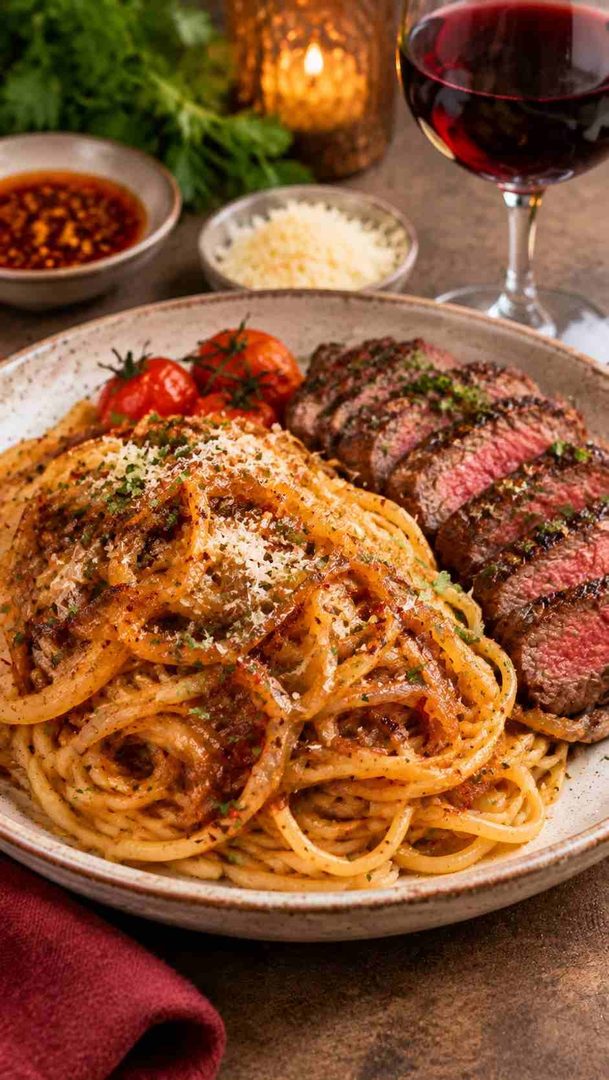
Pair with seared steak or a roast meat and red wine.
For a More Complete Meal
Add garlic shrimp, grilled chicken, or roasted broccoli on the side.
For a Lighter Option
Serve smaller portions with smashed cucumber salad or steamed greens.
Make-Ahead Preparation
The onions are the most time-consuming part of this caramelized onion pasta with chili oil recipe. Prep them ahead to cut cooking time in half.
- Prepare in Advance: Caramelize the onions up to 3 days ahead and refrigerate.
- A Few Hours Before Serving: Mince garlic, grate Parmesan, and measure the spices.
- Just Before Serving: Cook pasta, build the sauce, and toss everything together.
Storage and Reheating
Leftovers keep well with the right method. Store them within 2 hours of cooking.
- Refrigerator Storage: Refrigerate in an airtight container for up to 3 days.
- Freezer Storage: Skip freezing, since the cream sauce separates when thawed.
- Reheating Instructions: Warm in a skillet over low heat, stirring often.
- Restoring the Original Texture: Stir in a splash of milk or cream to loosen it.
Common Problems and How to Fix Them
Most issues come from heat level, sauce reduction, or seasoning. Match the problem to its fix.
- The Texture Is Not Right: Gummy pasta means overcooking. Pull it at al dente.
- The Flavor Is Too Mild: Add more chili crisp, a dash of soy sauce, or pepper.
- The Recipe Is Overcooked: Burnt onions taste bitter. Lower the heat and start fresh.
- The Consistency Is Too Thick or Too Thin: Loosen with pasta water, or simmer longer to thicken.
- The Final Result Looks Different Than Expected: Pale onions need more time on medium-low heat.
Frequently Asked Questions
What is the difference between chili crisp and chili oil?
Chili crisp is chili oil packed with crunchy fried bits like garlic and shallots. Plain chili oil is smoother and has no crunch. Chili crisp gives this pasta more texture and depth.
How spicy is this caramelized onion pasta with chili oil recipe?
It has mild to medium heat with 1 tbsp chili crisp. Use 2 tbsp for more kick. Start low and add extra at the table.
Can I use a different type of onion?
Yes. Yellow onions work well and taste slightly sweeter. Sweet onions like Vidalia caramelize faster, so watch them closely.
Can I make this pasta vegetarian?
It is already vegetarian. Check that your chili crisp contains no meat or fish products. Some brands include dried shrimp.
Why did my sauce turn grainy?
Pre-grated Parmesan or high heat causes a grainy sauce. Grate Parmesan fresh and add it over low heat. Stir until it melts completely before adding the pasta.