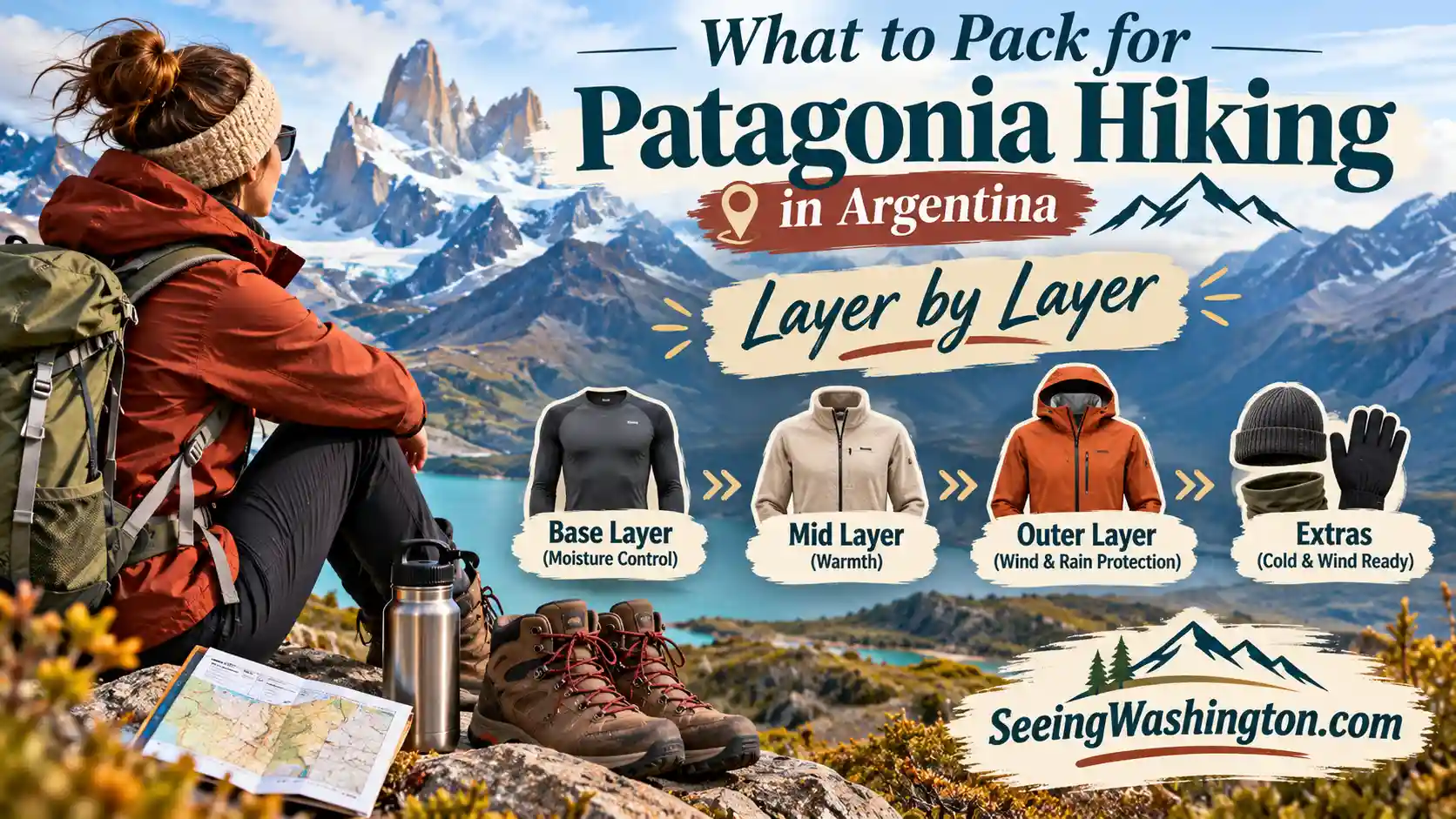
What to Pack for Patagonia Hiking in Argentina, Layer by Layer
Pack clothing as a layered system, with broken-in boots and a few small accessories to finish the kit. How heavy each piece should be depends on the month and the part of Patagonia you’re walking in. Checking the best time to visit Argentina before you book shows which season you’ll be walking into, from mild late-summer days by the lakes to a long, hard winter in the far south, so each layer can be chosen to fit it.
Roughly 90% of Patagonia lies in Argentina, running from Neuquén in the north down to Tierra del Fuego. That’s a huge area, and the weather shifts with every few hundred kilometres.
Layers from skin out
Bulk works against you here. The southern Andes hold lakes and temperate rainforest on their western flank, while the east opens into dry tablelands and steppe. The change can be startling over short distances.
Bariloche receives roughly 1,000 mm of precipitation a year, yet its airport, 15 km to the east, records under 600 mm. One heavy coat can’t cope with that swing. Several thin pieces can, because you add and strip them as a trail climbs out of beech forest onto a bare, windy ridge.
Start with the base layer. Merino wool is the better choice for most hikers: it stays warm when damp and doesn’t smell after days of wear in a mountain refugio. Synthetic tops dry quicker and cost less, which suits people who sweat heavily on climbs. Cotton has no place in the bag. A long-sleeve top and light leggings cover most trips, with a second top so one can dry overnight.
The mid layer is where the warmth lives. A midweight fleece breathes well on the uphill and keeps working when it gets wet. Add a light insulated jacket for rest stops and viewpoints, where the wind pulls heat out of you within minutes of stopping. Synthetic fill handles the damp western forests better. Down packs smaller and makes sense on the drier eastern side.
The shell is the piece to spend money on. You want a waterproof, breathable jacket with a hood that cinches tight and a stiff brim, plus waterproof trousers with side zips so they go on over boots. Patagonian wind drives rain sideways, and a cheap poncho turns into a sail.
Buy the shell first if the budget is tight.
Feet come next. Boots with ankle support and a waterproof membrane handle the scree and mud you’ll meet on most trails. Pair them with wool hiking socks and carry a dry spare pair in a plastic bag. Low gaiters keep grit and bog water out of your boots, and they earn their place on the soggy peat of Tierra del Fuego.
Then the small things. A warm beanie, a cap or sun hat, thin liner gloves with a windproof overmitt on top, and a neck gaiter you can pull over your nose in a gust. Together they weigh almost nothing, and they decide whether a cold ridge feels miserable or fine.
Daypack and regional changes
The daypack carries what keeps you safe between trailheads. Sun is strong on open ground and harsher still off snow and ice, so bring high-factor sunscreen and SPF lip balm, and wear wraparound sunglasses.
Many streams in the national parks are clean, though a small filter or purification tablets cost little. For navigation, download offline maps to your phone and pack a power bank, because cold drains batteries fast. A paper map of the park makes a good backup.
Then tune the kit to where you’re going:
- Lake District (Bariloche, Villa La Angostura): rain dominates. In Villa La Angostura it peaks from May to July, while February and March are much drier. Favour synthetic insulation and never skimp on the shell trousers.
- Fitz Roy and El Chaltén: wind is the main event. Windproof gloves and a hood that stays put matter more than extra warmth on most summer days.
- Ushuaia: winter lows seldom reach −10 °C, yet months of hovering near 0 °C bring a damp chill that works through thin layers. Bring a warmer insulated jacket and extra dry socks.
- Glacier country: the ice fields of Argentine Patagonia are the largest in the Southern Hemisphere outside Antarctica, and the air coming off them stays cold under clear skies. Pack your warmest mid layer and best sunglasses. If you book a guided walk on the ice, ask what technical gear the operator supplies.
What stays home matters as much. Jeans soak up rain and never dry. Cotton hoodies do the same. A huge winter parka is too warm for walking and too bulky to carry when you take it off. Umbrellas last about one gust. Leave the full-size towel and the town shoes you’ll wear once; a pair of light trainers covers evenings in El Chaltén or Bariloche.
Practical next steps for Patagonia Hiking in Argentina
Start by fixing your month and your region, since everything else follows from those two choices. A wet-season trip to the lakes needs different insulation from a summer trek under Fitz Roy.
Next, sort the shell and the boots. These are the hardest items to replace on the road, and boots need several weeks of local walks to soften before a long day on scree.
After that, build the base and mid layers around them, then test the whole system on a cold, wet day at home. Walk for an hour, stop, feel where the heat leaks out and adjust.
Pack the small items last, laid out on the floor so nothing gets forgotten: hat, gloves, neck gaiter, sunscreen, sunglasses, spare socks, power bank and map. If something on that floor never left the bag on your test walk, think hard about whether it needs to fly south.