Overnight French Toast Casserole Recipe
Overnight french toast casserole solves the busy-morning breakfast problem. You assemble it the night before, refrigerate it, and bake it when guests wake up. Thick bread cubes soak up a rich vanilla-cinnamon custard overnight. The oven turns them into a golden, custardy bake with a crisp brown sugar crumble.
Expect a soft, pudding-like center and caramelized edges in every scoop. This recipe feeds a crowd, travels well to brunches, and needs only pantry staples plus one good loaf of bread.

Quick Recipe Snapshot
- Prep Time: 20 minutes
- Cook Time: 45–55 minutes
- Total Time: 9 hours 30 minutes, including overnight chilling
- Servings: 10–12
- Difficulty: Easy
- Best For: Holiday mornings, weekend brunch, and feeding overnight guests
Before You Start
- Initial preparation: Use day-old bread. Stale bread absorbs custard without collapsing.
- Ingredient organization: Measure the custard and topping ingredients into separate bowls.
- Equipment requirements: You need a 9×13-inch baking dish and a whisk.
- Temperature considerations: Rest the chilled casserole 30 minutes before baking.
- Important preparation reminders: Refrigerate at least 8 hours. Never exceed 24 hours.
Ingredient List
For the Casserole
- 1 loaf (16 oz) French bread or brioche, cut into 1-inch cubes
- 8 large eggs
- 2 cups whole milk
- 1 cup heavy cream or half-and-half
- ⅓ cup granulated sugar
- 2 teaspoons pure vanilla extract
- 1 teaspoon ground cinnamon
- ¼ teaspoon ground nutmeg
- ¼ teaspoon kosher salt
- 1 tablespoon softened butter, for greasing the dish
For the Brown Sugar Topping
- ½ cup all-purpose flour
- ½ cup packed light brown sugar
- 1 teaspoon ground cinnamon
- ½ cup cold unsalted butter, cut into small cubes
- ½ cup chopped pecans, optional
For Serving
- Maple syrup, warmed
- Powdered sugar, for dusting
- Fresh berries, optional
Ingredient Substitutions
- Dairy-free: Swap milk and cream for 3 cups oat milk. Use plant butter.
- Gluten-free: Use 16 oz sturdy gluten-free bread. Dry the cubes 10 minutes first.
- Warm spice twist: Add ½ teaspoon cardamom and ¼ teaspoon ginger to the custard.
- Orange-vanilla version: Whisk 1 tablespoon orange zest into the custard before pouring.
- Lower sugar: Cut granulated sugar to 2 tablespoons. Halve the topping’s brown sugar.
Equipment You Need
- 9×13-inch baking dish: Holds the bread in one even layer for consistent baking.
- Large mixing bowl: Gives you room to whisk eggs and dairy smoothly.
- Whisk: Blends eggs fully so no streaks of white appear after baking.
- Serrated bread knife: Cuts clean cubes without crushing the loaf.
- Plastic wrap or foil: Seals the dish overnight and prevents fridge odors from absorbing.
- Instant-read thermometer: Confirms the egg custard reaches a safe 160°F.
How to Make This Recipe?
Overnight french toast casserole works in two stages: assemble at night, bake in the morning. The custard soaks into the bread while you sleep. The oven then sets the eggs and crisps the topping.
Phase 1: Prepare Everything
Cut the bread into 1-inch cubes. If the loaf is fresh, spread the cubes on a sheet pan and bake at 300°F for 10 minutes. Grease the baking dish with softened butter. Measure the custard ingredients into one area and the topping ingredients into another.
Phase 2: Start Building the Recipe
Spread the bread cubes evenly across the greased dish. Keep the layer level so every piece gets equal custard. Avoid packing the cubes down at this stage. Loose cubes leave room for the liquid to flow between them.
Phase 3: Develop the Main Components
Whisk the eggs in a large bowl until no streaks remain. Add milk, cream, sugar, vanilla, cinnamon, nutmeg, and salt. Whisk again until smooth. Pour the custard slowly over the bread, covering every cube. Press the top layer gently with a spatula to submerge dry spots.
Phase 4: Bring Everything Together
Cover the dish tightly and refrigerate for 8 to 24 hours. Make the topping the night before or in the morning. Combine flour, brown sugar, and cinnamon. Cut in the cold butter with a fork until it looks like coarse crumbs. Stir in pecans and refrigerate the topping in a sealed container.
Phase 5: Finish and Serve
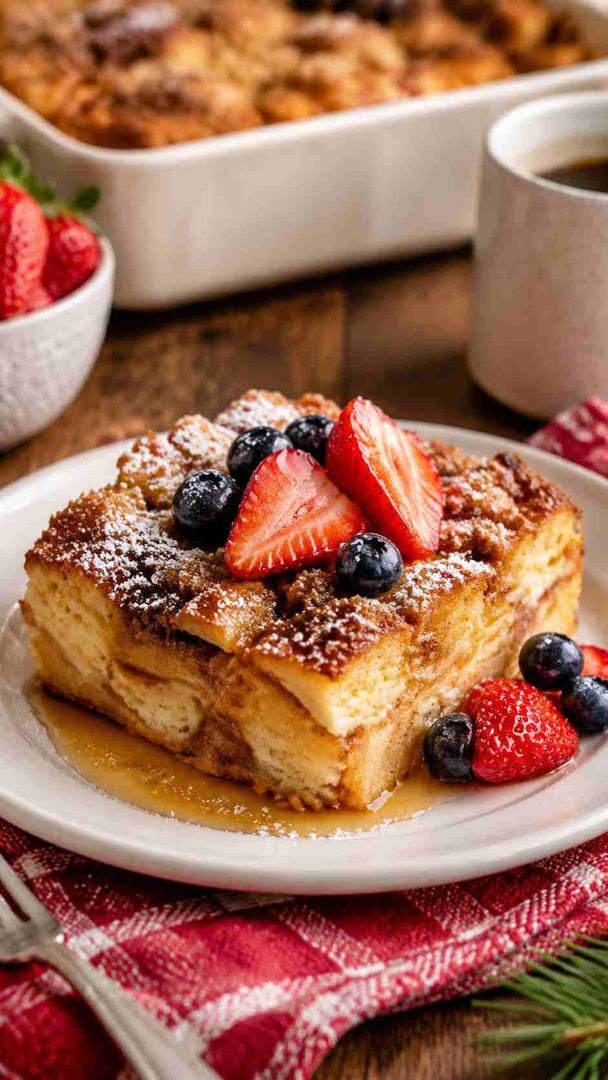
Remove the casserole from the fridge 30 minutes before baking. Heat the oven to 350°F. Scatter the topping evenly over the bread. Bake uncovered for 45 to 55 minutes, tenting with foil if the top browns early. Rest the casserole 10 minutes, then dust with powdered sugar and serve with warm maple syrup.
How to Tell When It’s Ready?
A finished casserole gives clear signals. Check these four before you pull it.
- Appearance: The top is deep golden. The edges look puffed and caramelized.
- Texture: The center feels set and springs back when pressed lightly.
- Temperature or Doneness: The center reads 160°F. A knife comes out without liquid.
- Final Result: Expect crisp edges, a custardy middle, and a crunchy sweet crumble.
Why Does This Recipe Work?
This recipe works because time does the hard part for you. Here is what makes it reliable.
- Flavor combination: Vanilla, cinnamon, and nutmeg give classic French toast flavor. The brown sugar topping adds caramel depth. Maple syrup ties every element together.
- Texture and consistency: Stale bread absorbs custard without turning to mush. The overnight soak hydrates every cube evenly. The cold butter topping bakes into a crisp crust.
- Cooking method: Baking cooks the whole batch at once. No standing at the stove flipping slices. Everyone eats warm food at the same time.
- Preparation time: Active work takes about 20 minutes. The fridge and oven handle the rest. Your morning job is preheating and serving.
- Ingredient accessibility: Every ingredient comes from a standard grocery store. Most are pantry staples you already own. The bread is the only item worth choosing carefully.
Important Tips for Better Results
Small choices decide whether your casserole turns custardy or soggy. Follow these tips.
- Pick sturdy bread: Brioche, challah, or French bread hold shape best.
- Dry fresh bread first: Toast fresh cubes briefly so they absorb custard properly.
- Whisk eggs thoroughly: Unmixed whites bake into rubbery white patches.
- Press, don’t crush: Submerge dry cubes gently without flattening the bread layer.
- Keep topping butter cold: Cold butter creates crisp crumbs instead of greasy puddles.
- Taste the custard: Adjust sugar and spice before pouring it over the bread.
- Rest before slicing: Ten minutes of resting helps squares hold their shape.
Recipe Variations and Customizations
The base recipe adapts easily. Swap a few ingredients to fit your table.
- Make It More Flavorful: Add 1 tablespoon bourbon or ½ teaspoon almond extract to custard.
- Adjust the Texture: Use 1 cup less milk for a firmer, bread-forward bake.
- Create a Different Version: Fold in 1½ cups blueberries or swirl in 4 oz cream cheese.
- Adapt It to Your Preferences: Skip pecans for nut-free. Use walnuts or oats instead.
What to Serve With This Recipe?
Overnight french toast casserole pairs well with savory and fresh sides. Choose by occasion.
For Everyday Meals
Serve with scrambled eggs and coffee. Protein balances the sweet casserole.
For Special Occasions
Add a fruit platter, mimosas, and a glazed ham for holiday brunch.
For a More Complete Meal
Pair with crispy bacon, breakfast sausage, and roasted potatoes for heartier appetites.
For a Lighter Option
Serve smaller squares with Greek yogurt and fresh berries.

Make-Ahead Preparation
This recipe is built for advance prep. Split the work across two days.
- Prepare in Advance: Assemble the casserole and topping up to 24 hours ahead.
- A Few Hours Before Serving: Warm the syrup and cut fruit. Set the table.
- Just Before Serving: Add topping, bake, rest 10 minutes, and dust with powdered sugar.
Storage and Reheating
Leftovers keep well with the right method. Store them promptly after serving.
- Refrigerator Storage: Cover tightly. Leftovers keep up to 4 days chilled.
- Freezer Storage: Freeze baked squares individually wrapped for up to 3 months.
- Reheating Instructions: Bake at 350°F for 15 minutes or microwave 45 seconds.
- Restoring the Original Texture: Reheat uncovered in the oven to re-crisp the topping.
Common Problems and How to Fix Them
Most casserole problems trace back to bread, soak time, or oven heat. Here are the fixes.
- The Texture Is Not Right: Soggy centers come from fresh bread. Use stale or toasted cubes.
- The Flavor Is Too Mild: Add more cinnamon, vanilla, and a pinch of extra salt.
- The Recipe Is Overcooked: Dry casseroles need syrup or cream. Check doneness 10 minutes earlier.
- The Consistency Is Too Thick or Too Thin: Adjust milk by ½ cup. Soak longer for runny batches.
- The Final Result Looks Different Than Expected: Pale tops need more oven time. Tent foil when browning fast.
Frequently Asked Questions
Can I bake overnight french toast casserole the same day?
Yes. Soak the bread at least 1 hour. Overnight soaking still gives the best texture.
What is the best bread for overnight french toast casserole?
Brioche, challah, and French bread work best. Their thick crumb absorbs custard without falling apart.
Should I cover the casserole while baking?
Bake uncovered for a crisp top. Tent with foil if the topping browns too fast.
Why is my casserole soggy in the middle?
The center is underbaked or the bread was too fresh. Bake until it reaches 160°F.
Can I freeze overnight french toast casserole before baking?
Yes. Freeze the assembled casserole up to 1 month. Thaw overnight in the fridge before baking.