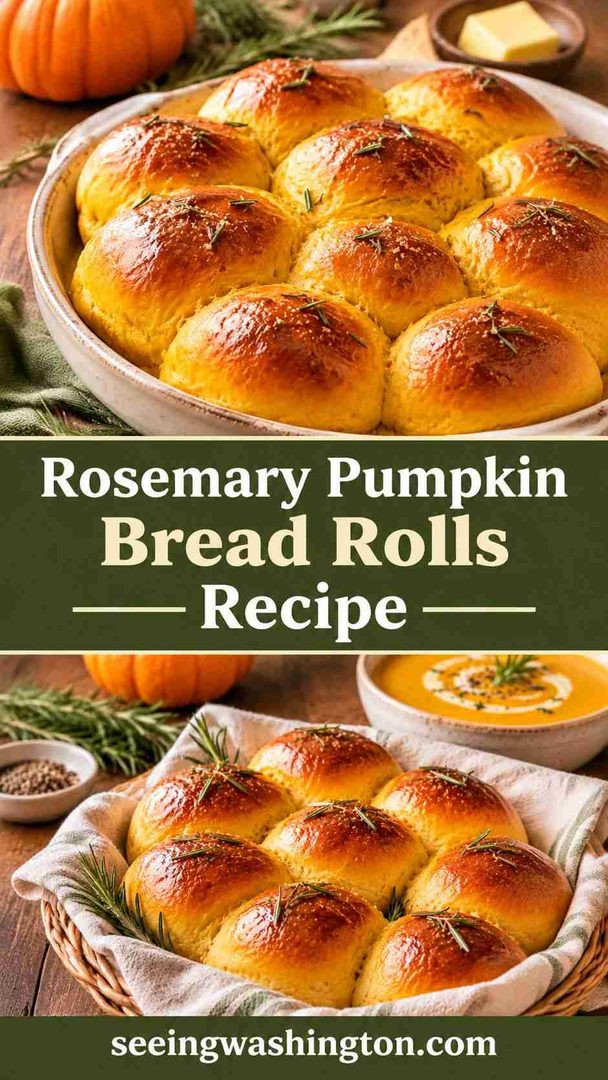
Rosemary Pumpkin Bread Rolls Recipe
Rosemary pumpkin bread rolls bring fall flavor to any dinner table. This rosemary pumpkin bread rolls recipe blends pumpkin puree into soft, enriched yeast dough. Fresh rosemary adds a savory, piney note to every bite. The pumpkin keeps the crumb moist, tender, and lightly golden inside.
A butter brush and flaky salt finish the tops. You get twelve pull-apart rolls with a soft, fluffy texture. They suit holiday menus, cozy weeknight soups, and everyday bread baskets.
Quick Recipe Snapshot
- Prep Time: 20 minutes
- Rise Time: 1 hour 30 minutes
- Cook Time: 20 minutes
- Total Time: About 2 hours 10 minutes
- Servings: 12 rolls
- Difficulty: Intermediate
- Best For: Holiday dinners, fall gatherings, and everyday bread baskets
Before You Start
Yeast dough rewards careful setup. These checks keep your rolls soft and well risen.
- Initial preparation: Bring the egg and pumpkin puree to room temperature.
- Ingredient organization: Weigh the flour and chop the rosemary before mixing.
- Equipment requirements: Grease a 9×13 pan and set out a stand mixer.
- Temperature considerations: Warm the milk to 110°F; hotter milk kills yeast.
- Important preparation reminders: Use plain pumpkin puree, not sweetened pumpkin pie filling.
Ingredient List
For the dough:
- 3½ cups (440 g) bread flour, plus extra for dusting
- 2¼ teaspoons (1 packet) instant yeast
- 2 tablespoons light brown sugar
- 1½ teaspoons fine salt
- 1 cup (240 g) canned pumpkin puree, room temperature
- ½ cup (120 ml) whole milk, warmed to 110°F
- 4 tablespoons unsalted butter, melted and slightly cooled
- 1 large egg, room temperature
- 2 tablespoons fresh rosemary, finely chopped
- ¼ teaspoon black pepper, optional
For the topping:
- 1 large egg beaten with 1 tablespoon water
- 2 tablespoons unsalted butter, melted
- 1 teaspoon fresh rosemary, finely chopped
- Flaky sea salt, for sprinkling
Ingredient Substitutions
- All-purpose flour: Swap 1:1 for bread flour. Rolls turn slightly softer and less chewy.
- Dairy-free milk and butter: Use oat milk and vegan butter in equal amounts. Mix them in at the same stage.
- Dried rosemary: Use 2 teaspoons dried rosemary instead of fresh. Crush it first and add with the flour.
- Honey or maple syrup: Replace brown sugar with 2 tablespoons honey. Add it with the wet ingredients.
- Sage and thyme blend: Use 1 tablespoon sage plus 1 tablespoon thyme. Add during mixing, like the rosemary.
Equipment You Need
- Stand mixer with dough hook: Kneads the sticky pumpkin dough without extra flour.
- Kitchen scale: Weighs flour and portions rolls evenly for uniform baking.
- 9×13 inch baking pan: Holds 12 rolls close together for soft, pull-apart sides.
- Bench scraper: Divides the dough cleanly and lifts it off the counter.
- Instant-read thermometer: Checks milk temperature and confirms the rolls are fully baked.
- Pastry brush: Applies egg wash and melted butter evenly across the tops.
How to Make This Recipe?
This rosemary pumpkin bread rolls recipe follows five clear phases. You mix, knead, and rise the dough first. Then you shape, proof again, and bake until golden.
Phase 1: Prepare Everything
Preparation sets up a strong rise. Warm the milk to 110°F and melt the butter. Let the butter cool slightly so it won’t cook the egg. Chop the rosemary finely to spread flavor evenly. Grease your 9×13 pan and set it aside.
Phase 2: Start Building the Recipe
The dry base comes together first. Whisk flour, yeast, brown sugar, salt, rosemary, and pepper in the mixer bowl. In a separate bowl, whisk pumpkin, warm milk, melted butter, and egg. Pour the wet mixture into the dry ingredients. Mix on low until a shaggy dough forms.
Phase 3: Develop the Main Components
Kneading builds the soft, fluffy structure. Knead on medium-low speed for 8 to 10 minutes. The dough should feel smooth, tacky, and slightly elastic. Add flour one tablespoon at a time only if needed. Place it in a greased bowl, cover, and rise 1 hour.
Phase 4: Bring Everything Together
Shaping turns one dough into twelve even rolls. Punch the dough down and turn it onto a floured surface. Divide it into 12 pieces, about 78 grams each. Pull each piece taut and roll it into a smooth ball. Arrange them in the pan, cover, and rise 30 minutes.
Phase 5: Finish and Serve
The final bake builds a glossy golden crust. Preheat the oven to 375°F during the second rise. Brush the rolls gently with egg wash. Bake 18 to 22 minutes until deep golden brown. Brush with rosemary butter, sprinkle flaky salt, and cool 10 minutes.
How to Tell When It’s Ready?
Baked rolls show clear signs of doneness. Check these before pulling the pan.
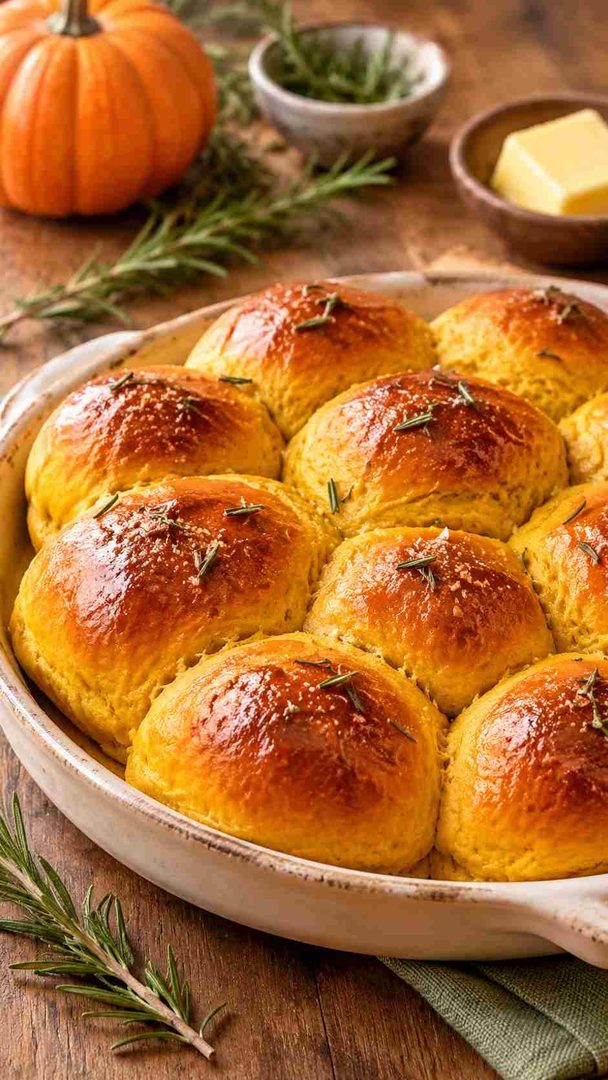
- Appearance: Tops look deep golden brown and evenly glossy.
- Texture: Rolls spring back quickly when pressed lightly on top.
- Temperature or Doneness: Center rolls read 190°F on an instant-read thermometer.
- Final Result: Soft, fluffy, orange-tinted crumb with fragrant rosemary throughout.
Why Does This Recipe Work?
This rosemary pumpkin bread rolls recipe balances moisture, structure, and flavor. Each element plays a specific role.
- Flavor combination: Pumpkin adds mild, earthy sweetness to the dough. Rosemary brings a savory, piney contrast. Flaky salt sharpens both flavors on top.
- Texture and consistency: Pumpkin puree holds moisture, so the crumb stays tender. Butter and egg enrich the dough for a soft bite. Bread flour gives enough structure for a tall rise.
- Cooking method: Two rises create a light, airy interior. Baking rolls close together keeps their sides soft. The egg wash builds a shiny, golden crust.
- Preparation time: Hands-on work takes only about 20 minutes. Rising time is passive, so you can prep other dishes.
- Ingredient accessibility: Canned pumpkin, flour, and yeast sit in every grocery store. Fresh rosemary is easy to find year-round.
Important Tips for Better Results
Small habits make a big difference with yeast dough. Follow these to avoid dense or dry rolls.
- Practical tip: Weigh flour instead of scooping; scooping packs in too much.
- Preparation tip: Blot watery pumpkin puree with paper towels before mixing.
- Cooking tip: Rotate the pan halfway through baking for even browning.
- Texture tip: Keep the dough slightly tacky; extra flour makes rolls dense.
- Seasoning tip: Add pepper or garlic powder for a more savory roll.
- Serving tip: Serve warm with whipped honey butter or salted butter.
- Rising tip: Rise dough in a warm spot, like an off oven with the light on.
Recipe Variations and Customizations
The base dough adapts to many flavors and occasions. Try these simple changes.
- Make It More Flavorful: Knead in ½ cup shredded Parmesan with the flour.
- Adjust the Texture: Swap ½ cup bread flour for whole wheat flour.
- Create a Different Version: Shape into knots or cloverleaf rolls in a muffin tin.
- Adapt It to Your Preferences: Add 1 teaspoon cinnamon and skip rosemary for sweeter rolls.
What to Serve With This Recipe?
Savory roasts, soups, and fall sides pair best with these rolls.
For Everyday Meals
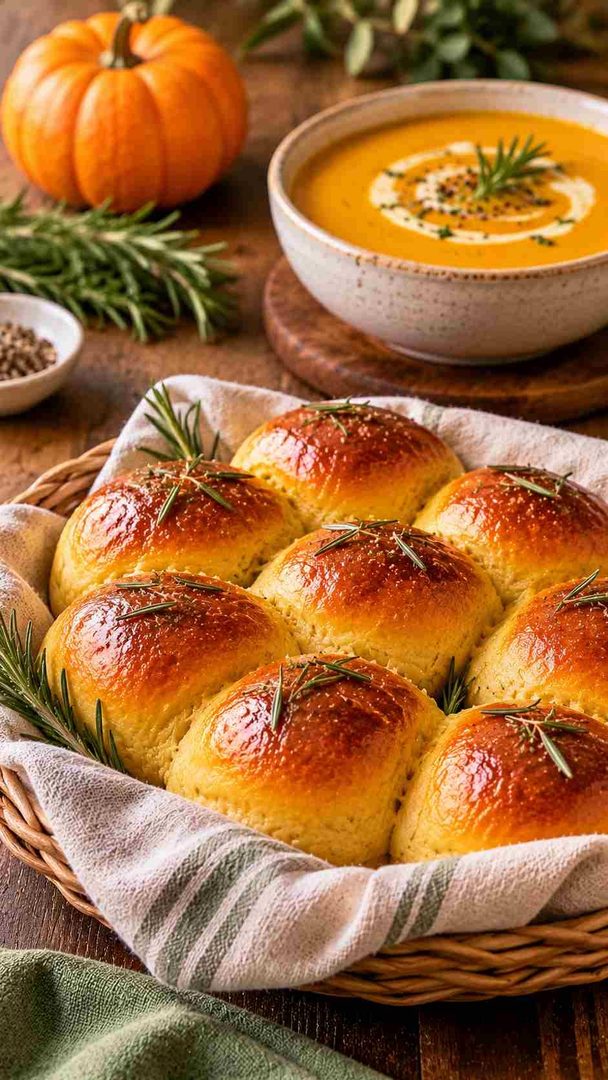
Serve with butternut squash soup, beef stew, or chicken chili.
For Special Occasions
Pair with roast turkey, glazed ham, or herb-crusted pork loin.
For a More Complete Meal
Add roasted root vegetables, green bean casserole, and mashed potatoes.
For a Lighter Option
Serve one roll with a kale and apple salad.
Make-Ahead Preparation
Making dough early frees up time on busy holidays. Plan your timeline with these steps.
- Prepare in Advance: Shape rolls, cover tightly, and refrigerate up to 18 hours.
- A Few Hours Before Serving: Rest chilled rolls at room temperature 60–90 minutes until puffy.
- Just Before Serving: Brush with egg wash, bake, and add rosemary butter.
Storage and Reheating
Proper storage keeps rolls soft for days. Use these methods for leftovers.
- Refrigerator Storage: Skip the fridge; it dries bread faster than the counter.
- Room Temperature Storage: Keep in an airtight bag for up to 3 days.
- Freezer Storage: Freeze cooled rolls in freezer bags for up to 3 months.
- Reheating Instructions: Warm wrapped in foil at 350°F for 8–10 minutes.
- Restoring the Original Texture: Brush stale rolls with butter before reheating in foil.
Common Problems and How to Fix Them
Most roll problems trace back to yeast, flour, or temperature. Here are quick fixes.
- The Texture Is Not Right: Dense rolls mean too much flour or underproofing.
- The Flavor Is Too Mild: Add more rosemary, a pinch of salt, or Parmesan.
- The Recipe Is Overcooked: Brush dry rolls with butter and wrap them warm.
- The Consistency Is Too Thick or Too Thin: Sticky dough needs flour one tablespoon at a time.
- The Final Result Looks Different Than Expected: Flat rolls mean dead yeast; check milk temperature next time.
Frequently Asked Questions
Can I make this rosemary pumpkin bread rolls recipe without a stand mixer?
Yes. Knead by hand for 10 to 12 minutes. Stop when the dough feels smooth and springy.
Can I use fresh pumpkin instead of canned puree?
Yes. Roast and purée the pumpkin, then strain out extra water. Fresh puree runs wetter than canned.
Why are my pumpkin rolls dense?
Dense rolls usually have too much flour. Underproofing also limits the rise.
Can I freeze the dough for this rosemary pumpkin bread rolls recipe?
Yes. Freeze shaped, unbaked rolls up to 1 month. Thaw overnight in the fridge, then proof and bake.
Do these rolls taste sweet?
No. Pumpkin adds mild earthiness, not strong sweetness. Rosemary and flaky salt keep them savory.