
Museum of Pop Culture Seattle – Things to See, Hours, Tickets
Standing beneath the wavy metallic outside of the Museum of Pop Culture, I saw something amazing. The building looks like it’s melting and exploding at the same time. It’s frozen in a moment of creative chaos.
This isn’t just weird architecture. It’s a statement about pop culture itself. Pop culture is constantly shifting, evolving, and breaking rules.
Inside this Frank Gehry masterpiece, I’ve found Jimi Hendrix’s guitars next to horror film props. A huge fantasy dragon looms over video game history. Visitors of all ages jam on real instruments in soundproof studios.
The Museum of Pop Culture doesn’t just show you artifacts. It invites you to be part of the ongoing story. You learn how music, film, gaming, and pop culture shape who we are.
What Makes the Museum of Pop Culture Seattle’s Cultural Cornerstone?
I’ve come to understand that the Museum of Pop Culture is unique among American museums. It treats popular culture with the same serious attention usually saved for fine art.
Microsoft co-founder Paul Allen founded it in 2000. MoPOP was born from a radical idea: the music, films, and creative expressions that shape our daily lives deserve serious preservation and study.

From Experience Music Project to Museum of Pop Culture
I’ve watched the museum’s evolution mirror pop culture’s own journey.
The Beginning: It started as the Experience Music Project. This was mainly a music museum dedicated to the Pacific Northwest‘s rich musical heritage.
The Evolution: It expanded into a comprehensive celebration of contemporary creativity.
The Name Change (2016): The new name reflected this broader mission. It became a living, evolving institution. It captures culture as it happens, not decades later.
A Democratic Approach to Cultural Value
What I find special about MoPOP is its democratic approach to cultural value. A hand-carved blues guitar gets the same respectful treatment as a mass-produced action figure from a beloved film. Why? Because both have shaped how millions of people experience their world.
The museum doesn’t ask if something is “high art.” It asks:
- Did it move people?
- Did it spark creativity?
- Did it capture a moment in cultural time?
Location and Collection
The museum sits at Seattle Center. This puts it at the heart of the city’s creative identity.
Seattle has always been a city of makers and innovators. I’ve seen how MoPOP fits perfectly in this tradition. It celebrates:
- The region’s huge contribution to American pop culture
- Global entertainment history
Today’s Collection: MoPOP houses over 80,000 artifacts:
- Kurt Cobain’s handwritten lyrics
- Original costumes from classic films
- A comprehensive archive of contemporary cultural expression
The Architectural Marvel Behind Museum of Pop Culture
Frank Gehry’s Visionary Design
Frank Gehry faced a specific challenge: How do you create a building that shows the energy, rebellion, and constant change of rock and roll? His answer? Design a structure that looks like it’s captured mid-transformation. It refuses to settle into normal architectural categories.
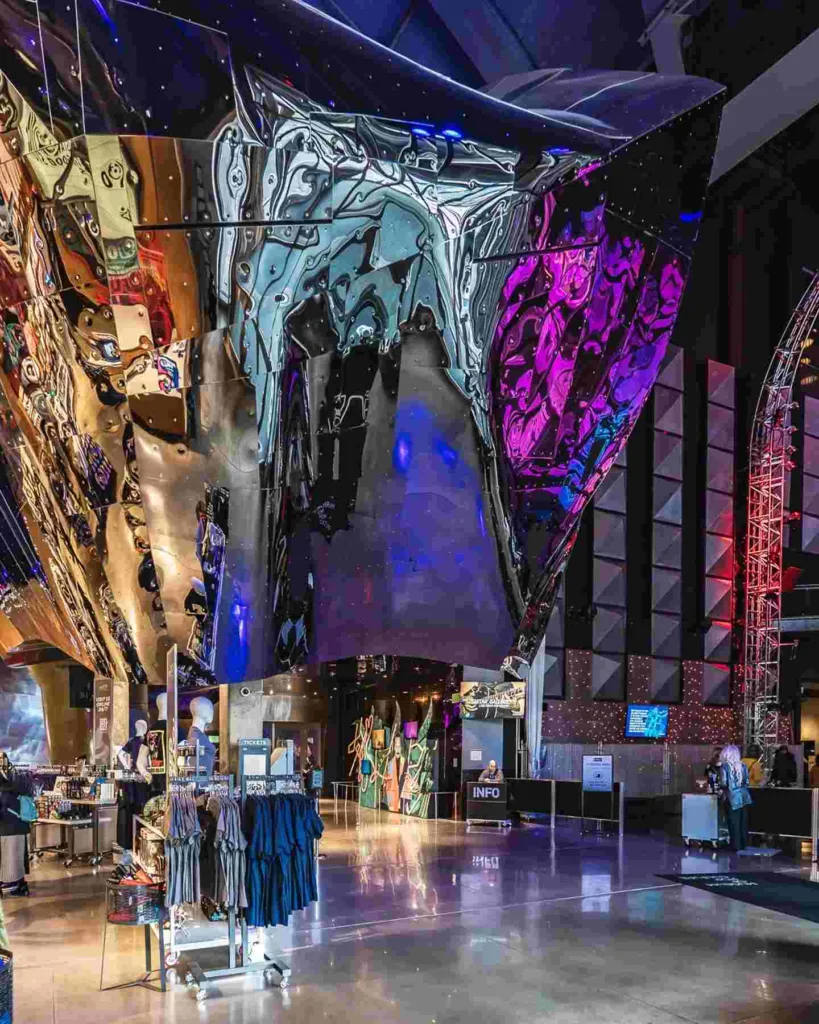
The design started with smashed electric guitars. Those iconic images of rock rebellion where instruments are destroyed in moments of creative excess. Gehry and his team translated the jagged, broken forms of shattered guitars into architecture.
A 140,000-square-foot building covered in over 21,000 individually shaped aluminum and stainless steel shingles. Each one is unique.
The Technology: These metal panels were made using aerospace technology. Precision computer-controlled equipment cut them to create surfaces that catch and reflect light in constantly changing ways.
The Effect: Depending on time of day, weather, and viewing angle, I’ve seen the building:
- Glow gold
- Shimmer silver
- Deepen into rich purples and blues
Form Meets Function
The exterior makes a bold statement to Seattle’s skyline. But I’ve discovered the interior reveals Gehry’s genius for creating spaces that work for visitors.
The dramatic entrance leads you into a soaring central atrium. Here, the full scope of Gehry’s vision becomes clear. Gallery spaces flow into one another naturally. Curving walls create intimate viewing areas. But they maintain visual connections to other parts of the museum.
A museum celebrating music needs to let visitors experience loud audio. But it can’t disturb other galleries.
The Solution: Gehry’s team built in sophisticated acoustic engineering. They created spaces like the Sound Lab. In the Sound Lab, I’ve heard visitors play electric guitars at full volume. Meanwhile, people in nearby galleries view quiet exhibits undisturbed.
The Sky Church
This is the most iconic interior space. It’s a performance venue and exhibition hall that rises through multiple levels.
Original Design: A space where music could be experienced with concert-level intensity.
Features: The Sky Church has one of the world’s largest indoor LED screens.
Flexibility: I’ve seen the space change from an intimate exhibit area to a full concert venue. This shows the building’s flexibility.
Planning Your Visit to the Museum of Pop Culture
Museum Hours and Best Times to Visit
The Museum of Pop Culture usually opens daily from 10:00 AM to 5:00 PM. But these hours can change seasonally and for special events.
Always check the official website before you visit. The museum sometimes closes for private events or changes hours during holidays.
Optimal Visiting Times I’ve Discovered
- Weekday mornings (Tuesday-Thursday): Most peaceful viewing conditions
- Opening time (10:00 AM): Enjoy approximately one hour before crowds build
- Avoid: Saturday and Sunday afternoons, especially during summer and holidays
Seasonal Considerations
| Season | What to Expect |
| Summer (June-August) | Peak tourist season, larger crowds, but extended hours and special programming |
| Winter (January-March) | Most relaxed experience, smaller crowds |
| Evening Events | Occasionally offered for concerts, lectures, exhibition openings (separate tickets required) |
Ticket Pricing and Money-Saving Tips
General admission for adults usually runs between $30 and $35.
Reduced Rates For:
- Seniors
- Students with valid ID
- Children ages 5-17
Free Admission:
- Children under 5
- Military members (special discounted rates with proper ID)
Combination Ticket Savings
- Space Needle and MoPOP combo: Save approximately 15-20% compared to separate admissions
- Triple combo (Space Needle, MoPOP, Chihuly Garden and Glass): Reduce total cost by up to 25%
- Validity period: Combination tickets remain valid for up to one year
Annual Membership Benefits
For Seattle residents or visitors planning multiple trips, I believe annual membership deserves serious consideration. An individual membership, typically priced slightly above two single-day admissions, provides unlimited visits for a full year plus additional benefits including discounts at the museum store, priority access to special events, and reciprocal admission benefits at select museums nationwide.
Additional Savings Strategies
- Buy online ahead of time (skip box office lines)
- Look for special promotions during slower months (January-February)
- Follow social media or sign up for email newsletters for exclusive deals
- Check for community access days for local residents
Navigating the MoPOP Like a Pro
I’ve found that Frank Gehry’s architecture creates a journey that feels natural rather than forced. But this flowing design can initially feel confusing to first-time visitors. The museum has three main levels. But Gehry’s design makes these levels feel more continuous than traditional floor-by-floor buildings.
Layout by Level
Ground Level
- Admissions area and museum store
- Sky Church (your navigational landmark)
- Sound Lab and music history exhibits
Second Level
- Science fiction and fantasy collections
- Rotating special exhibitions
- Views down into Sky Church
Third Level
- Specialized exhibitions and interactive spaces
- Quieter viewing experience
- Less foot traffic
My Navigation Tip
Rather than attempting to see everything in geographic order, I recommend organizing your visit thematically. Start with the exhibits that most interest you, using the Sky Church as your central reference point. The museum provides printed maps and has staff members stationed throughout who can redirect you toward specific exhibits.
How Long Should You Visit?
One of the most common visitor questions has no single answer, as I’ve found the Museum of Pop Culture offers vastly different experiences depending on your interests and engagement style.
- The Highlight Visit (1.5-2 hours): Focus on three or four major exhibits that align with your interests. When I do a highlight tour, I typically include the Nirvana exhibit, Sky Church, either the science fiction collection or horror exhibit, and 15-20 minutes in the Sound Lab. This approach gives you a taste of MoPOP’s range without overwhelming your schedule.
- The Standard Visit (3-4 hours): This timeframe allows for a comprehensive museum experience that I find most visitors find satisfying. You can explore all major permanent exhibitions at a comfortable pace, read contextual information, and engage meaningfully with interactive elements. This is my recommended timeframe for first-time visitors who want to feel they’ve truly experienced the museum without exhausting themselves.
- The Deep Dive (5-6 hours or full day): When I want a truly immersive experience, I dedicate this extended timeframe. A deep dive allows you to read nearly every placard, explore research stations and interactive databases, participate in multiple Sound Lab sessions, and return to favorite exhibits for second viewings.
MoPOP Four-Hour Itinerary
| Time/Activity | Duration |
| Arrive at opening (avoid crowds) | – |
| Music history exhibits | 60-75 minutes |
| Sky Church | 20 minutes |
| Sound Lab session | 45 minutes |
| Break for lunch or snack | – |
| Science fiction and fantasy collections | 60 minutes |
| Horror exhibit or special exhibition | Remaining time |
| Museum store browsing | 20 minutes |
Inside the Museum of Pop Culture: Permanent Collections and Exhibitions
Music History and Innovation
I’ve found the Museum of Pop Culture’s roots in music history remain its strongest draw for many visitors. These exhibits don’t just show instruments and clothing. They tell the story of how music:
- Shapes identity
- Builds communities
- Channels both rebellion and healing
Nirvana: Taking Punk to the Masses
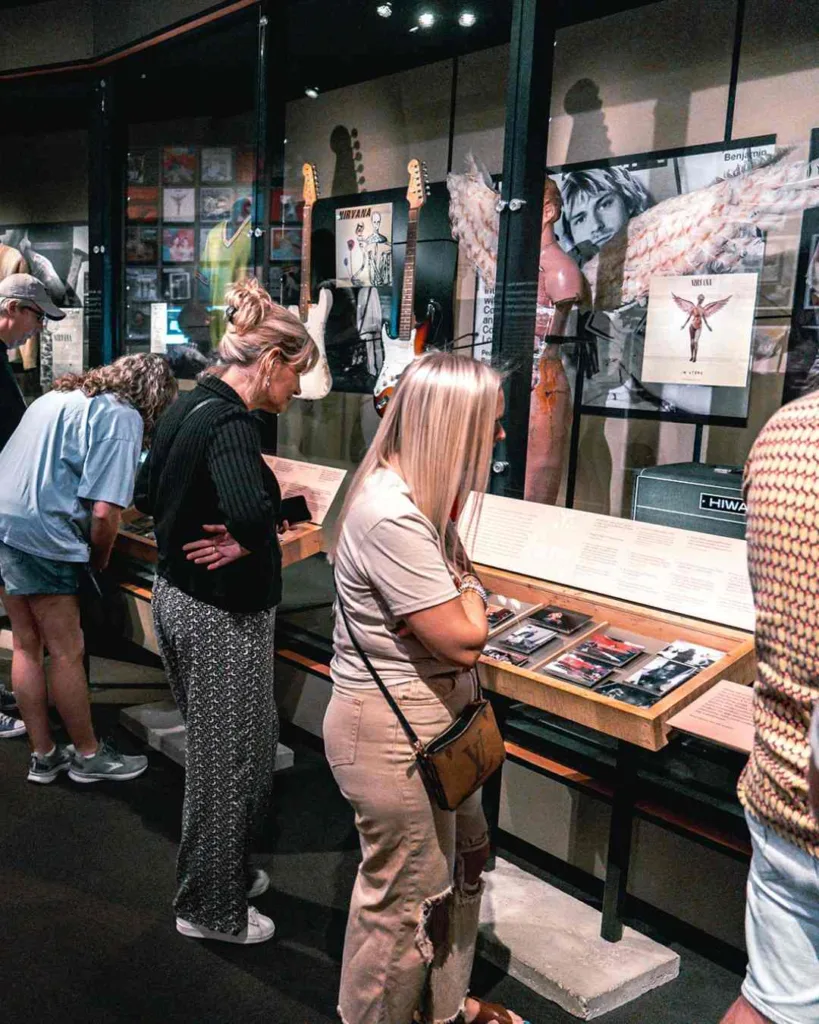
This exhibit stands as the museum’s emotional centerpiece for many visitors. When I explored it, I saw Kurt Cobain’s guitars, including instruments he modified himself with stickers and electrical tape, each one bearing the physical marks of having been played with intensity.
Handwritten lyrics reveal Cobain’s creative process, with crossed-out words and margin notes that humanize the genius. The exhibit contextualizes Nirvana within the broader grunge movement while examining the personal cost of sudden fame.
Jimi Hendrix Gallery
Seattle’s most legendary musical export receives his own dedicated gallery space. When I visited, I found guitars that Hendrix actually played, including instruments from historic performances, along with stage costumes that capture his theatrical approach to rock music.
Interactive listening stations let you hear his innovations in real-time, comparing his techniques to earlier blues guitarists and understanding what made his approach revolutionary.
The Guitar Gallery
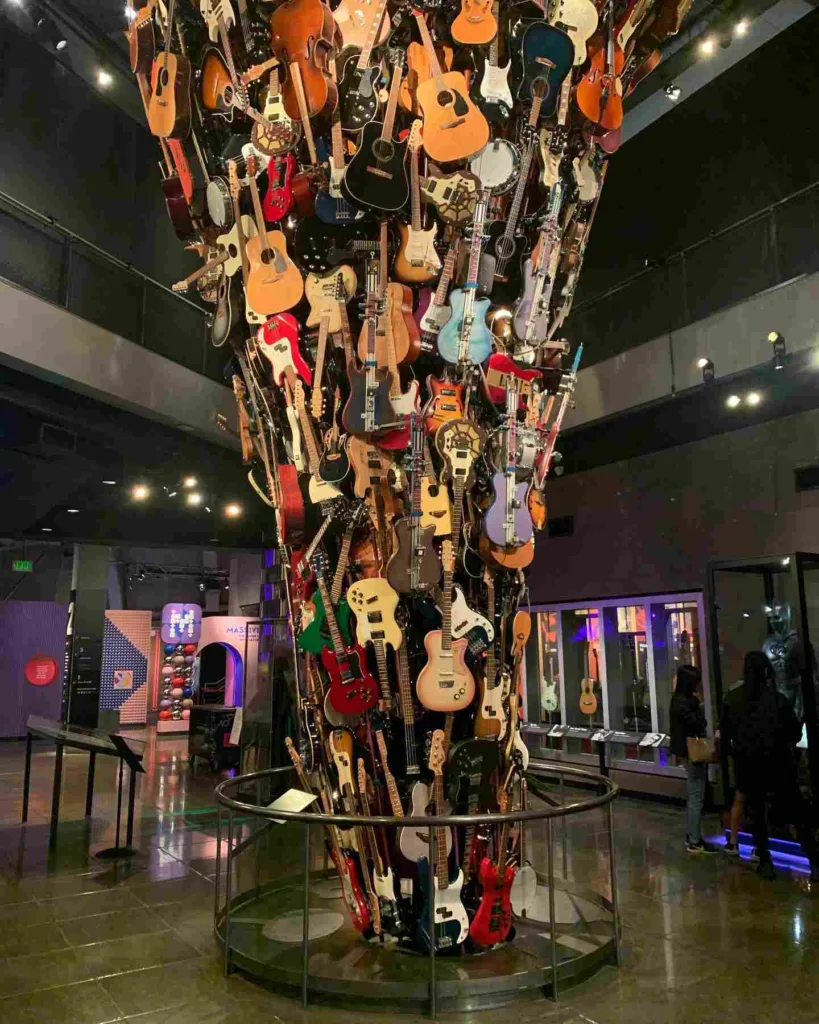
This collection showcases the evolution of this instrument from simple acoustic designs to complex electric models that enabled entirely new genres of music. The collection spans centuries and cultures, demonstrating how this versatile instrument adapted to everything from classical music to heavy metal.
The Sound Lab Experience at MoPOP
Perhaps the most democratic and joyful part of MoPOP’s music experience is the Sound Lab. It’s an interactive space where I’ve watched visitors become temporary musicians.
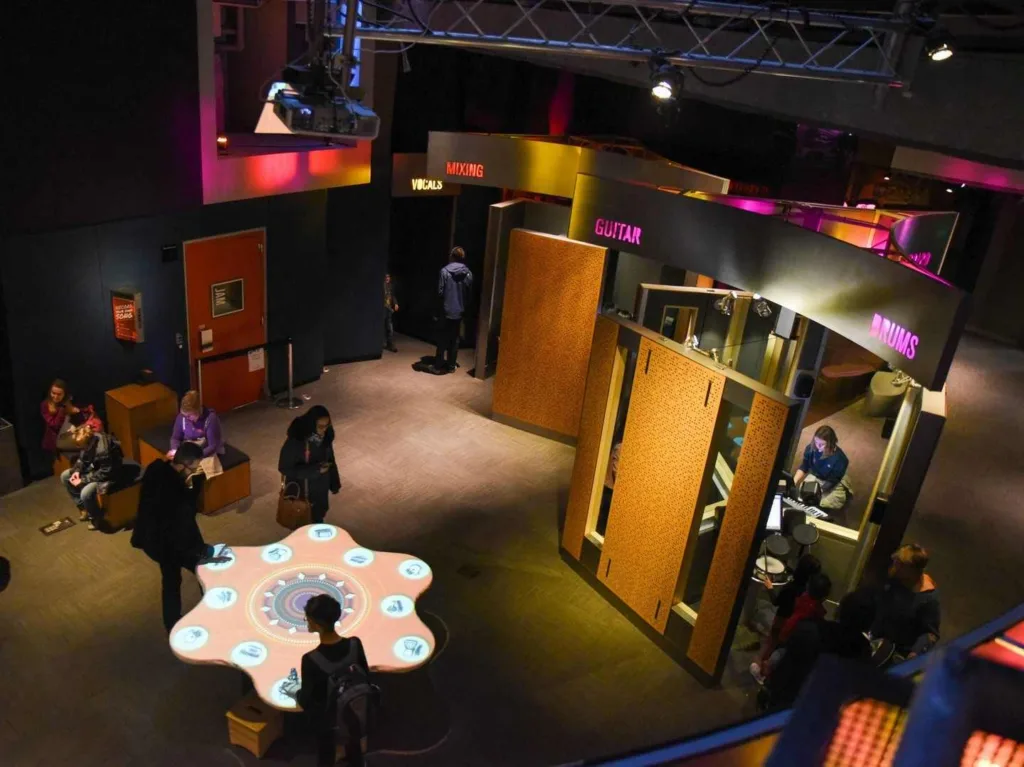
What It Is: This isn’t a children’s play area. It’s a serious music-making environment with:
- Real instruments
- Professional-quality equipment
- Soundproof rooms where you can actually learn something
What’s Available: I’ve explored the lab featuring:
- Drum kits
- Keyboards
- Guitars
- Bass
- Microphones
- Mixing equipment
The Staff: Museum staff and volunteers, often professional musicians themselves, provide brief lessons and encouragement.
Why It’s Genius: The Sound Lab demystifies music-making. It shows visitors that creating music isn’t reserved for the naturally gifted. It’s accessible to anyone willing to try.
Science Fiction and Fantasy Universe at MoPOP
I’ve discovered that MoPOP houses one of the world’s most comprehensive collections of science fiction and fantasy artifacts. It transforms these often-dismissed genres into subjects worthy of serious study.
Walking into these exhibition spaces feels like stepping into the collective imagination of generations of storytellers and fans.
The Permanent Sci-Fi Collection
The collection spans the history of the genre. From early pulp magazines through contemporary blockbuster franchises.
What I Saw: Original costumes from:
- Star Trek
- Star Wars
- Blade Runner
- Dozens of other landmark films and TV shows
Important: These aren’t reproductions. They’re the actual garments worn on screen. Complete with the wear and aging that gives them authenticity.
What Makes This Collection Special
The exhibit puts these artifacts in the broader history of speculative fiction.
It Explains:
- How science fiction responded to real-world concerns about technology
- Space exploration
- Nuclear weapons
- Social change
Interactive Displays: You can explore:
- How costume designers created alien cultures
- How prop makers built believable futuristic weapons
- How makeup artists transformed human actors into otherworldly beings
The Dragon Sculpture
One of the exhibit’s most impressive elements I’ve seen is a massive dragon sculpture suspended from the ceiling.
What It Represents:
- Fantasy literature’s most iconic creature
- Surrounded by artifacts from:
- The Lord of the Rings
- Game of Thrones
- Other fantasy properties
Pop Icons & Exhibitions at Museum of Pop Culture
Beyond music and science fiction, I’ve found MoPOP dedicates significant space to broader popular culture. These exhibitions show the museum’s commitment to taking seriously the cultural phenomena that shape how we understand our world.
Scared to Death: The Thrill of Horror Film
When I explored the horror collection, it examined what draws humans to entertainment that deliberately frightens them. I saw iconic pieces like the original Alien xenomorph, Freddy Krueger’s glove, and detailed creature designs from films spanning horror’s history.
The exhibit addresses how horror films reflect societal anxieties, from Cold War nuclear fears to contemporary concerns about technology and surveillance.
The Indie Game Revolution
This exhibit chronicles video gaming’s evolution from corporate-dominated industry to a medium where small teams and individual creators can reach global audiences. Interactive stations let me play games that pushed boundaries, from simple but emotionally resonant independent titles to complex narratives that rival traditional literature. The exhibit includes development materials, concept art, and interviews with game designers.
Pearl Jam Exhibit
This collection chronicles another Seattle band that rose from local clubs to international prominence. When I viewed it, seeing the physical evolution of the band through instruments, setlists, and personal items showed how long-term artistic careers develop.
Rotating Special Exhibitions
I’ve noticed the museum regularly hosts rotating special exhibitions that keep the content fresh for repeat visitors and address contemporary pop culture phenomena. Past special exhibitions have explored everything from Marvel superheroes to the history of hip-hop, from Dungeons & Dragons’ cultural impact to the enduring influence of specific musical artists.
Special Features and Hidden Gems at Music of Pop Culture
Beyond the major exhibitions, I’ve found MoPOP rewards curious visitors who explore thoroughly. There are hidden gems and special features that many people miss.
LAIKA Animation Studio Exhibit
The museum’s relationship with LAIKA (the Portland-based animation studio) includes an exhibit featuring puppets and sets from films like:
- Coraline
- Kubo and the Two Strings
- ParaNorman
What I Discovered: When I explored these delicate, intricate puppets, I gained appreciation for the painstaking craft of stop-motion animation.
Museum of Pop Culture Coraline Connection: This exhibit specifically showcases:
- Original puppets from the beloved film
- Sets from the film
- Technical innovations that brought Neil Gaiman’s story to life
Photography Opportunities
For photography enthusiasts, I’ve discovered the museum offers remarkable opportunities despite varying photo policies for different exhibits. The architecture itself is endlessly photogenic, with reflective surfaces, dramatic angles, and unexpected vistas.
I’ve found the exterior is best photographed in late afternoon when the colored panels catch warm light. Inside, the Sky Church’s soaring space and massive video screen create dramatic backdrops.
The Museum Store
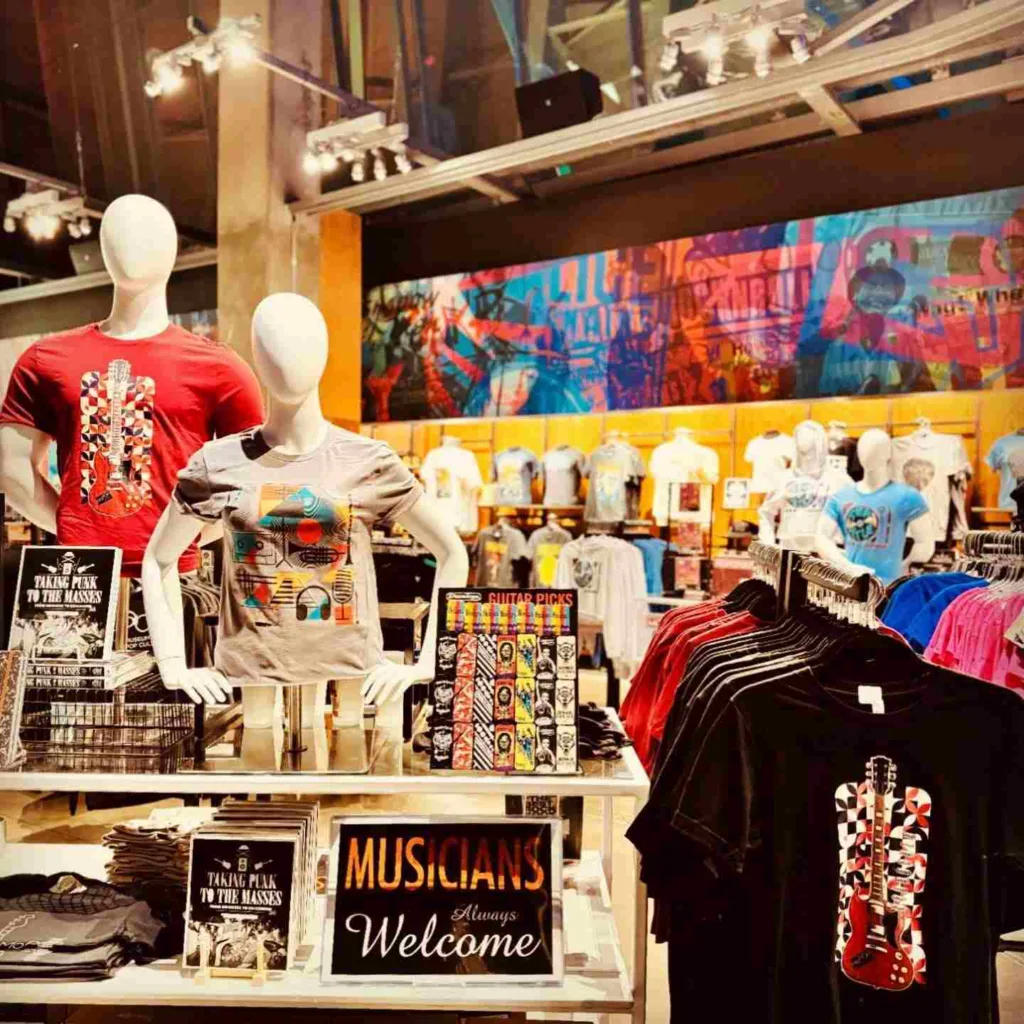
I believe the museum store deserves more attention than typical tourist gift shops. Rather than generic Seattle souvenirs, I’ve found carefully curated books about music history and pop culture, vinyl records spanning decades of music, art prints by contemporary artists, and unique merchandise related to current exhibitions.
Oral Histories
Throughout exhibitions, I’ve listened to recordings of interviews with:
- Artists
- Designers
- Fans
They explain what specific cultural moments meant to them.
Why They Matter: These oral histories humanize pop culture history. They remind you that every cultural phenomenon represents real people creating, sharing, and being moved by art.
What Visitors Actually Think: MoPOP Reviews
I’ve analyzed thousands of visitor reviews. They reveal consistent themes about the MoPOP experience, both positive and critical. These can help you set appropriate expectations and maximize your visit.
What Visitors Consistently Love
The architecture generates extreme reactions—people either find it visually thrilling or aesthetically challenging—but even critics acknowledge its memorable impact. I’ve read that music fans consistently rate the Nirvana and Jimi Hendrix exhibits as highlight experiences, particularly visitors who remember these artists’ cultural impact firsthand.
The emotional resonance of seeing Kurt Cobain’s actual guitars and handwritten lyrics exceeds expectations for many guests. Parents and children both praise the Sound Lab enthusiastically, with many families reporting they spent more time there than anticipated because kids and adults didn’t want to leave.
The science fiction collection receives particular praise from genre fans who appreciate seeing beloved films and shows treated with curatorial respect rather than as mere entertainment.
Common Criticisms
The admission price prompts the most frequent complaints, with visitors divided on whether the experience justifies the cost. Budget-conscious travelers sometimes feel disappointed, particularly if they’re not deeply interested in the specific topics covered. The museum’s focus on Pacific Northwest music and American pop culture can feel limited to international visitors hoping for broader global coverage.
Some visitors report that exhibits feel smaller than expected given the building’s massive exterior, a perception likely influenced by how the flowing architecture distributes exhibitions across three levels rather than concentrating them in large gallery spaces.
How Different Visitors Rate Their Experience
- Music enthusiasts: Particularly fans of rock, alternative, and grunge music, consistently give the museum high ratings and often visit multiple times to explore different aspects of the collection.
- Science fiction and fantasy fans: Similarly report high satisfaction, frequently mentioning that seeing screen-used costumes and props exceeded expectations.
- Families with children ages 8-16: Report positive experiences, particularly if they budget time for the Sound Lab and interactive elements. However, families with very young children under 5 sometimes struggle, as the museum doesn’t cater specifically to toddlers.
- Architecture enthusiasts: Visit specifically for the Gehry building, and these visitors focus as much on the structure as the contents, walking the museum with attention to sight lines, materials, and spatial experiences.
- Casual tourists: Without specific interest in pop culture, music, or science fiction report more mixed experiences—some discover unexpected enthusiasm for topics they didn’t realize interested them, while others feel the museum wasn’t worth diverting time from other Seattle attractions.
Making the Most of Your Museum Experience
Essential Visitor Tips
I’ve learned that maximizing your MoPOP experience requires some practical planning beyond just showing up.
What to Bring
- Comfortable walking shoes (you’ll spend hours on your feet)
- Phone or camera for photography (flash prohibited)
- Only essential items (large bags must be checked)
Accessibility Features
- All levels accessible via elevator
- Free wheelchairs and mobility scooters (first-come, first-served)
- Service animals welcome throughout
- Audio description tours and assistive listening devices available upon request
Dining Options
The museum doesn’t have a full-service restaurant inside, but there’s a small cafe offering snacks, beverages, and light fare. For more substantial meals, Seattle Center provides numerous options within a short walk. Your admission allows same-day re-entry with hand stamp, so I can leave for lunch and return.
Parking and Transportation
Parking at Seattle Center can be challenging and expensive during peak hours. I highly recommend Seattle public transportation. The Seattle Center is accessible via multiple bus lines, and the Seattle Monorail connects directly to downtown.
If driving, consider parking in downtown Seattle and taking the monorail to Seattle Center, which often proves faster and cheaper than circling for parking spaces.
Photography Policies
I’ve found most permanent exhibits allow photography for personal use without flash. However, some temporary exhibitions and loan artifacts prohibit photography entirely. Always check posted signs in each gallery. The architecture itself is always fair game for photography.
Sound Considerations
The museum can get loud, particularly in the Sky Church and Sound Lab areas. If you’re sensitive to noise, bring earplugs or plan your route to minimize time in high-volume areas.
Combining MoPOP with Other Seattle Attractions
I’ve discovered the Museum of Pop Culture’s location at Seattle Center creates natural opportunities for building a full day of cultural exploration. Seattle Center was originally built for the 1962 World’s Fair. Now it houses multiple attractions within easy walking distance.
Space Needle
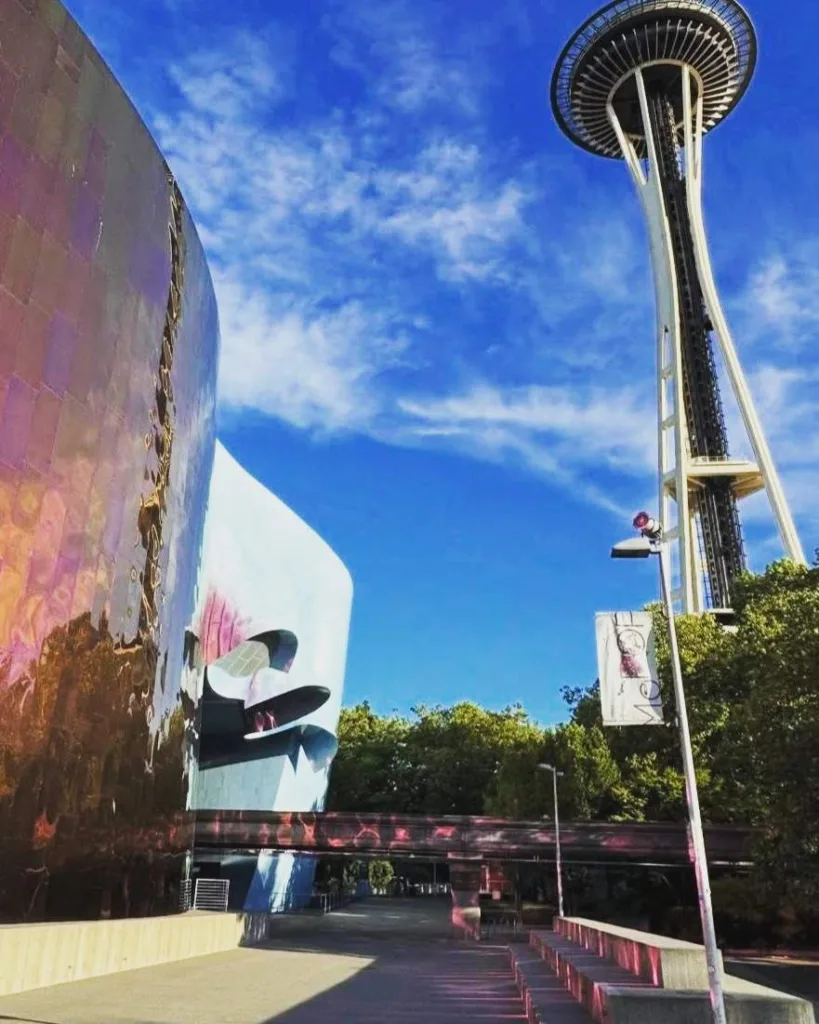
The Space Needle stands immediately adjacent to MoPOP, and I’ve noticed the contrast between these two architectural landmarks illustrates Seattle’s evolving architectural identity.
If you’re purchasing a combination ticket, morning visits to the Space Needle provide clearer views before afternoon haze develops, while MoPOP’s indoor environment works equally well any time of day.
Chihuly Garden and Glass
Chihuly Garden & Glass Museum attraction features the spectacular glass art of Dale Chihuly. It sits steps away from both MoPOP and the Space Needle.
Triple-Attraction Day: I’ve done this. It’s ambitious but achievable:
| Time | Activity |
| 10:00 AM | Start with Space Needle |
| Mid-morning | Move to Chihuly Garden and Glass |
| Lunch | Break at Seattle Center |
| Afternoon | Spend at MoPOP |
Pacific Science Center
Also located at Seattle Center, this attraction appeals particularly to families with children and science enthusiasts. The contrast between MoPOP’s pop culture focus and Pacific Science Center’s hands-on science exhibits provides variety for multi-day visits.
Pike Place Market
Beyond Seattle Center, Pike Place Market sits about one mile away, easily reached by foot, monorail, or bus. I’ve found pairing a morning at Pike Place Market with an afternoon at MoPOP creates a well-rounded Seattle experience combining the city’s historic character with its contemporary culture.
Music-Focused Day
For a music-focused day, I consider visiting the Museum of Pop Culture in the morning, then exploring Capitol Hill or Fremont neighborhoods in the afternoon. Capitol Hill, Seattle’s historic music and arts district, features record stores, live music venues, and the vibrant character that nurtured many musicians whose work you’ve just seen at MoPOP.
Beyond the Visit: MoPOP’s Cultural Impact
I’ve come to understand that the Museum of Pop Culture represents something larger than a collection of artifacts behind glass. It’s part of an ongoing cultural shift. It changes how we understand and value popular culture as a legitimate subject of serious study and preservation.
The Old Way
For decades, traditional museums focused primarily on:
- Historical artifacts
- Fine art
- Objects deemed culturally significant by established academic standards
Pop culture received little institutional attention. Yet this is the music, films, fashion, and entertainment that actually shaped most people’s daily experiences.
The Change MoPOP Helped Create
I’ve witnessed how MoPOP helped change this dynamic.
What MoPOP Did: Applied the same standards to a Nirvana guitar as a traditional museum would to a Stradivarius violin:
- Curatorial rigor
- Scholarly research
- Preservation standards
The Argument: Cultural value isn’t determined by:
- Age
- Academic prestige
It’s determined by actual impact on people’s lives.
Educational Programs and Scholarly Impact
The museum’s educational programs extend this mission beyond the galleries. MoPOP offers programs for students at all levels, from elementary school field trips that introduce young people to music history to college-level seminars that treat pop culture as serious academic subject matter.
The museum’s Pop Conference, an annual gathering of scholars, critics, and writers, demonstrates that popular music deserves the same intellectual attention as any art form.
Economic and Cultural Impact on Seattle
For Seattle specifically, I’ve seen how MoPOP has become part of the city’s identity and economic development. The building itself is now as iconic to Seattle’s skyline as the Space Needle, appearing in tourism materials and media coverage.
The museum attracts visitors who might not otherwise prioritize Seattle, particularly music fans on pilgrimages to see Nirvana and Jimi Hendrix artifacts.
A Democratic Cultural Institution
Perhaps most importantly, I believe MoPOP serves as a democratic cultural institution.
The Difference: Traditional art museums can feel intimidating to people without art history backgrounds. This creates barriers between institutions and communities.
MoPOP’s Approach: MoPOP invites everyone in. It acknowledges that expertise in pop culture is widely distributed.
Who Has Expertise:
- The teenager who knows every Nirvana album
- The parent who grew up with Star Trek
- The gamer who understands indie game history
All bring valid expertise to their museum experience.
Conclusion
I’ve found the Museum of Pop Culture offers something increasingly rare in our digital age: a physical space where pop culture receives the attention, preservation, and scholarly treatment it deserves. Walking through Frank Gehry’s architectural masterpiece, surrounded by artifacts that shaped music, film, and entertainment history,
I’m not just seeing objects behind glass—I’m witnessing the ongoing project of deciding what matters in our culture and why. Whether you spend two hours hitting highlights or dedicate a full day to deep exploration, I’ve discovered MoPOP rewards engagement. The Nirvana exhibit might trigger nostalgia for those who lived through the grunge era or serve as history lesson for younger visitors.
The science fiction collections celebrate imagination and craftsmanship. The Sound Lab demystifies music-making. Each element contributes to a larger argument: that the culture we consume daily, the music we love, the films that move us, and the games that challenge us all deserve preservation and study.
I recommend planning your visit with realistic expectations about time, crowds, and your own interests to ensure the best experience. Purchase tickets in advance, arrive early on weekdays if possible, and don’t try to see everything if that means rushing. The Museum of Pop Culture invites you not just to observe culture, but to understand your place within it.


