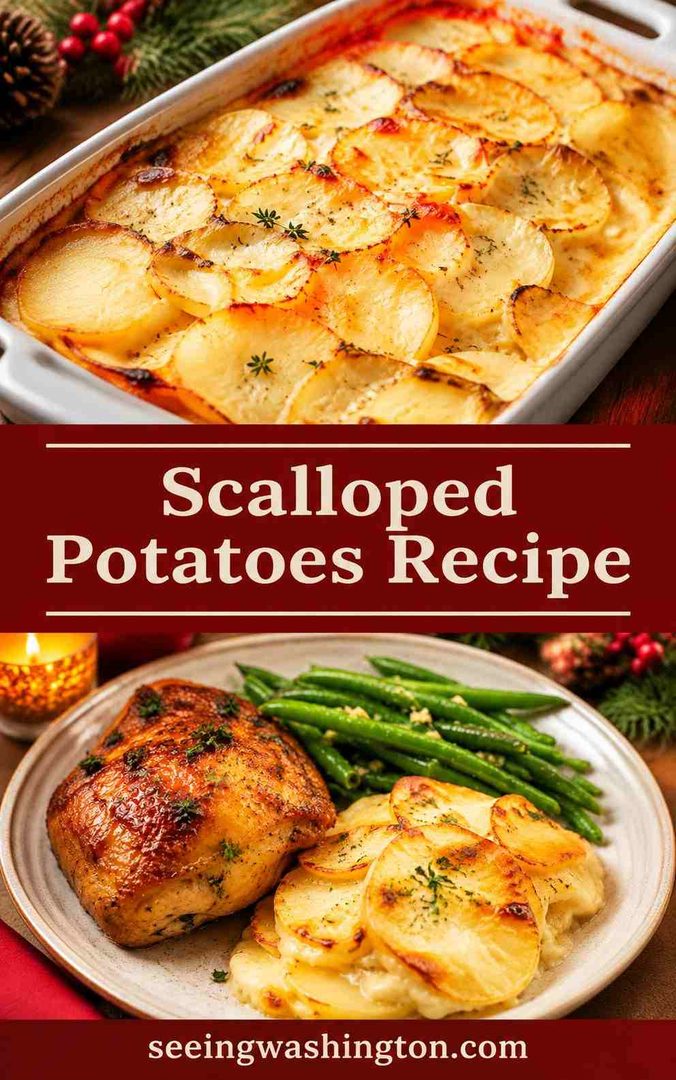
Scalloped Potatoes Recipe
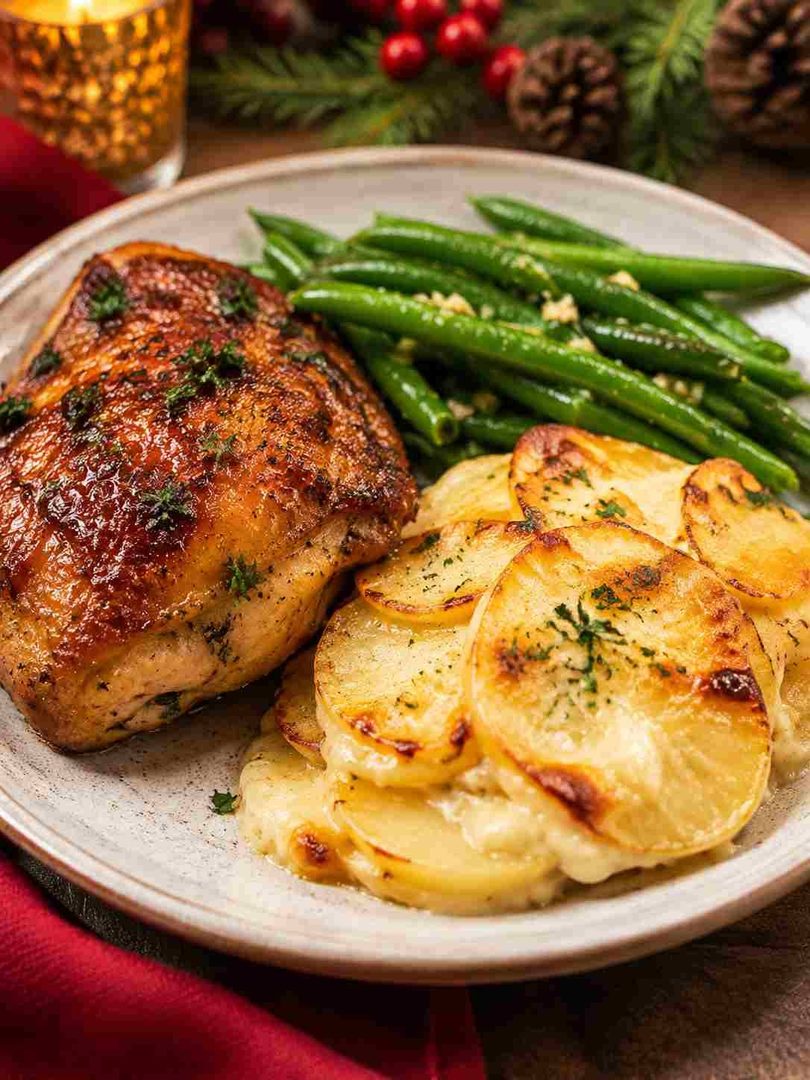
These scalloped potatoes bring cozy, cheesy comfort to any holiday table. Thin Yukon Gold slices bake slowly in a creamy, herb-flecked sauce. Garlic, onion, and fresh thyme add savory depth to every layer. Sharp cheddar melts into a bubbly, golden-brown crown on top.
A milk and broth sauce keeps everything creamy but never too heavy. Serve them at Easter, Thanksgiving, Christmas, or Sunday dinner. Below, you’ll find easy steps, smart swaps, and make-ahead tips.
Quick Recipe Snapshot
- Prep Time: 20 minutes
- Cook Time: 1 hour 10 minutes
- Total Time: 1 hour 30 minutes, plus 20 minutes resting
- Servings: 12
- Difficulty: Easy to moderate
- Best For: Easter, Thanksgiving, Christmas, potlucks, and family dinners
Before You Start
A little prep makes layering and baking smooth and stress-free.
- Initial preparation: Preheat the oven and grease a 9×13-inch baking dish.
- Ingredient organization: Slice potatoes, onion, and grate the garlic and cheese first.
- Equipment requirements: Grab a sharp knife, medium skillet, whisk, and foil.
- Temperature considerations: Heat the oven to 400°F before you build the casserole.
- Important preparation reminders: Slice potatoes evenly, about ⅛ inch thick, for even cooking.
Ingredient List
These simple ingredients create a creamy, cheesy, and flavorful side dish.
- 3 tablespoons unsalted butter: Plus extra for greasing the baking dish.
- ¼ cup all-purpose flour: Thickens the sauce with the melted butter.
- 2 cups whole milk: Creates a smooth, creamy base for the sauce.
- 1 cup vegetable broth: Lightens the sauce and adds savory flavor.
- 4 garlic cloves: Grated for a smooth, aromatic sauce.
- 1 tablespoon fresh thyme leaves: Chopped for fresh, earthy herb notes.
- 2 teaspoons sea salt: Seasons the potatoes and sauce throughout.
- ½ teaspoon freshly ground black pepper: Adds gentle warmth and balance.
- 3 pounds Yukon Gold potatoes: Sliced ⅛ inch thick, skins on or peeled.
- ½ medium yellow onion: Thinly sliced for sweet, savory layers.
- 1½ cups grated cheddar cheese: Divided for melty layers and a golden top.
Ingredient Substitutions
These easy swaps help you adjust the dish for any table.
- Gluten-Free Flour: Use ¼ cup 1-to-1 gluten-free flour blend in the roux.
- Dairy-Free Milk: Swap whole milk for 2 cups unsweetened oat milk. Add it the same way.
- Richer Sauce: Replace 1 cup milk with heavy cream for extra richness.
- Cheese Blend: Use ¾ cup Gruyère and ¾ cup cheddar for nutty depth.
- Dried Thyme: Use 1 teaspoon dried thyme. Add it with the garlic.
Equipment You Need
A few basic tools keep this recipe simple and the results consistent.
- Chef’s knife or mandoline: Slices potatoes thin and even for uniform cooking.
- Medium skillet: Melts butter and cooks the creamy sauce gently.
- Whisk: Keeps the roux and sauce smooth and lump-free.
- 9×13-inch baking dish: Holds the layers and bakes them evenly.
- Aluminum foil: Traps steam so potatoes soften before browning.
- Box grater: Shreds cheddar and grates garlic for easy melting.
How to Make This Recipe?
These come together in five easy phases. You slice the potatoes, make a quick sauce, and layer everything. Baking covered softens the potatoes, then uncovered browns the cheese. A short rest lets the sauce set for clean, creamy slices.
Phase 1: Prepare Everything
Preheat the oven to 400°F. Grease a 9×13-inch baking dish with butter. Slice the potatoes ⅛ inch thick using a knife or mandoline. Thinly slice the onion. Grate the garlic and cheddar, then chop the thyme.
Phase 2: Start Building the Recipe
Melt the butter in a medium skillet over medium heat. Add the flour and whisk for 1 minute. Slowly pour in the milk, whisking constantly. Then whisk in the vegetable broth until smooth.
Phase 3: Develop the Main Components
Add the garlic, thyme, salt, and pepper to the sauce. Cook for 2 to 3 minutes, whisking often. Stop when the sauce lightly coats the back of a spoon. Keep it below a boil so it doesn’t split. Remove the skillet from the heat.
Phase 4: Bring Everything Together
Layer half the potatoes in the prepared baking dish. Top with half the onion and half the sauce. Sprinkle 1 cup cheddar over the first layer. Repeat with remaining potatoes, onion, sauce, and ½ cup cheese.
Phase 5: Finish and Serve
Cover the dish with foil and bake for 30 minutes. Uncover and bake 35 to 40 minutes more. The cheese should turn golden and bubbly. Let the potatoes rest 20 minutes before slicing. Serve warm.
How to Tell When It’s Ready?
Perfect scalloped potatoes show a few clear signs. Check these before serving.
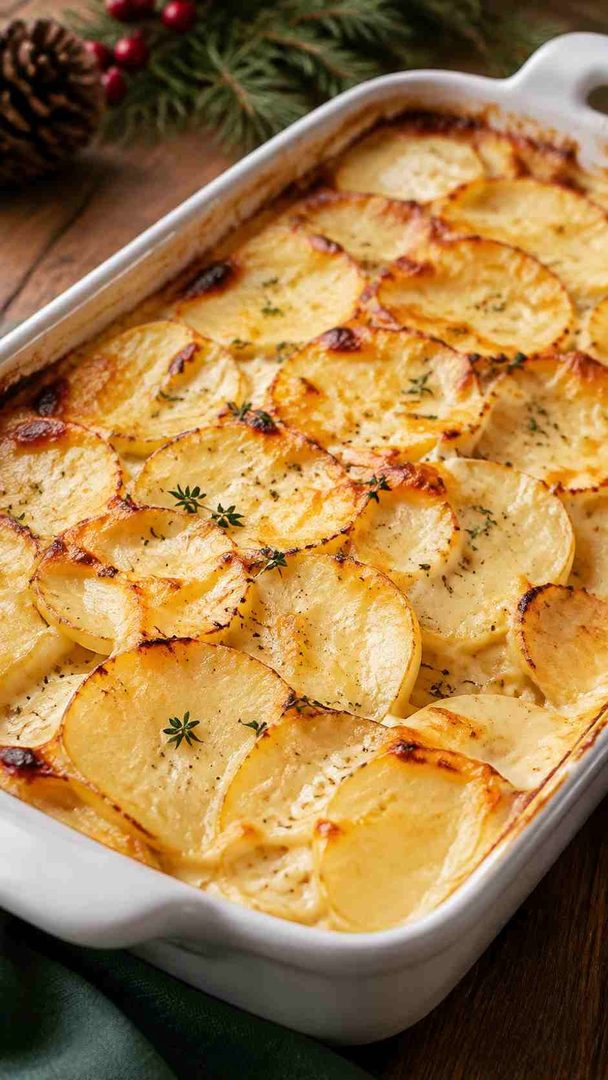
- Appearance: The top looks golden brown with bubbling sauce around the edges.
- Texture: Potato layers feel soft, creamy, and hold together when sliced.
- Temperature or Doneness: A knife slides through the center layers with no resistance.
- Final Result: Tender, cheesy layers coated in a creamy, savory herb sauce.
Why Does This Recipe Work?
This recipe balances comfort and flavor without feeling too heavy. Here’s why it shines.
- Flavor combination: Garlic, onion, and thyme give the creamy sauce savory depth. Cheddar adds tangy, nutty richness that ties every layer together.
- Texture and consistency: Thin, even slices bake into soft, tender layers. The roux thickens the sauce so it clings instead of pooling.
- Cooking method: Baking covered first steams the potatoes until fully tender. Uncovering later browns the cheese into a bubbly golden top.
- Preparation time: Active prep takes about 20 minutes. The oven handles the rest while you finish other dishes.
- Ingredient accessibility: Every ingredient is a common grocery store staple. Most are probably already in your fridge or pantry.
Important Tips for Better Results
Small details make a big difference with this creamy casserole. Keep these tips in mind.
- Slice thin and even: Uniform ⅛-inch slices cook through at the same rate.
- Choose Yukon Golds: Their creamy texture and buttery flavor suit this dish best.
- Whisk constantly: Adding liquids slowly keeps the sauce smooth and lump-free.
- Never boil the sauce: High heat can make the sauce split or curdle.
- Bake covered first: Foil traps steam so the potatoes soften fully.
- Taste the sauce: Adjust salt before layering, since potatoes absorb a lot.
- Let it rest: Twenty minutes helps the sauce thicken for neat slices.
Recipe Variations and Customizations
Scalloped potatoes adapt easily to different tastes and occasions. Try these ideas.
- Make It More Flavorful: Caramelize the onion first, or add grated Parmesan on top.
- Adjust the Texture: Double the sauce for a saucier, creamier casserole.
- Create a Different Version: Skip the cheese for classic, cream-only scalloped potatoes.
- Adapt It to Your Preferences: Fold in cooked ham or bacon for a heartier dish.
What to Serve With This Recipe?
This recipe pairs well with roasted mains and fresh vegetables. Pick what fits your meal.
For Everyday Meals
Roast chicken, pork chops, or meatloaf with steamed green beans.
For Special Occasions
Glazed ham, roast turkey, or prime rib with dinner rolls.
For a More Complete Meal
Roasted carrots, a green salad, and a hearty roasted protein.
For a Lighter Option
Grilled fish, roasted asparagus, or a crisp lemony salad.
Make-Ahead Preparation
This dish tastes even better made ahead. Here’s how to plan it.
- Prepare in Advance: Bake fully, cool, cover, and refrigerate up to 2 days.
- A Few Hours Before Serving: Let the dish sit at room temperature before reheating.
- Just Before Serving: Bake covered at 350°F for 30 minutes until hot.
Storage and Reheating
Leftover scalloped stay delicious with proper care. Follow these simple steps.
- Refrigerator Storage: Store in an airtight container for up to 4 days.
- Freezer Storage: Freeze up to 2 months, though the sauce may separate slightly.
- Reheating Instructions: Warm covered in a 350°F oven or in the microwave.
- Restoring the Original Texture: Add a splash of milk before reheating dry leftovers.
Common Problems and How to Fix Them
Even classic casseroles can go off track. Here’s how to fix common issues.
- The Texture Is Not Right: Undercooked potatoes need thinner slices or more covered baking.
- The Flavor Is Too Mild: Add more salt, garlic, or sharper cheddar next time.
- The Recipe Is Overcooked: Mushy potatoes mean slices were too thin, so check earlier.
- The Consistency Is Too Thick or Too Thin: Cook a watery sauce longer until it coats a spoon.
- The Final Result Looks Different Than Expected: Curdled sauce usually means it boiled, so keep heat lower.
Frequently Asked Questions
What’s the difference between scalloped potatoes and au gratin?
Traditional scalloped skip cheese. Au gratin versions include cheese on top.
What are the best potatoes for scalloped potatoes?
Yukon Golds work best for their creamy texture and buttery flavor.
Can I make scalloped potatoes gluten-free?
Yes. Swap the flour for a 1-to-1 gluten-free flour blend.
Why are my scalloped potatoes still hard?
Thick slices take longer. Bake longer or slice thinner next time.
Can I make this recipe ahead of time?
Yes. Bake, chill up to 2 days, then reheat covered.